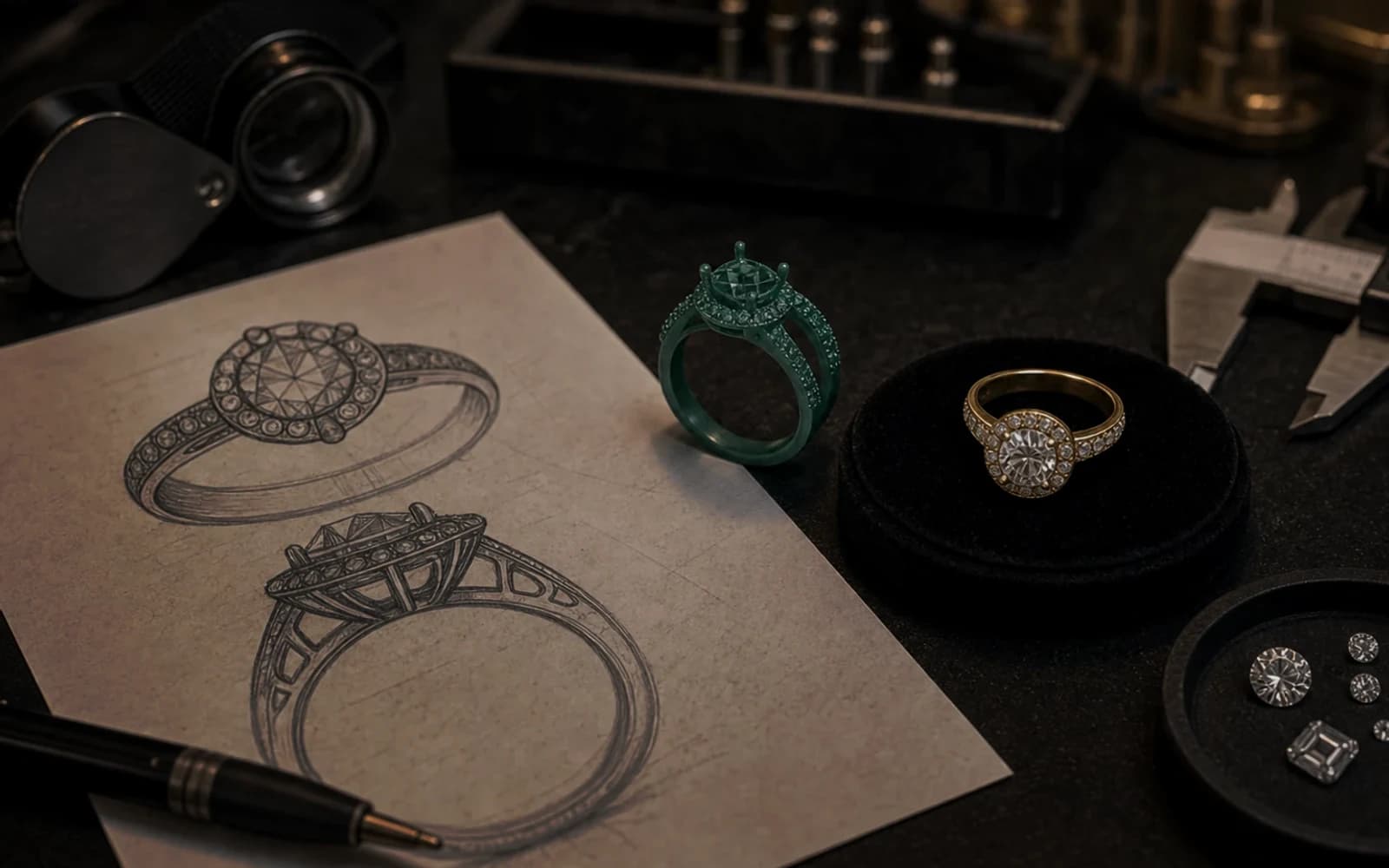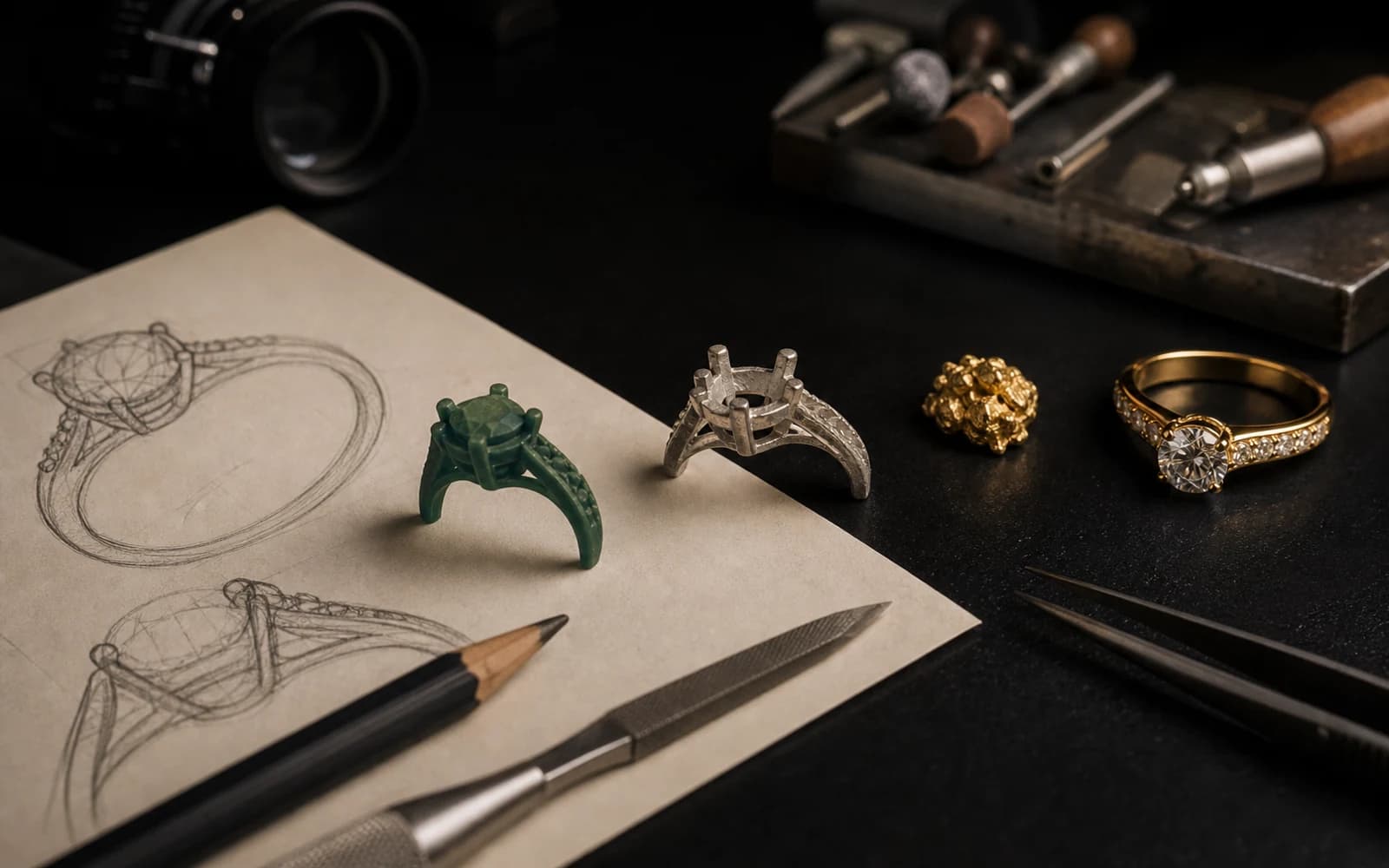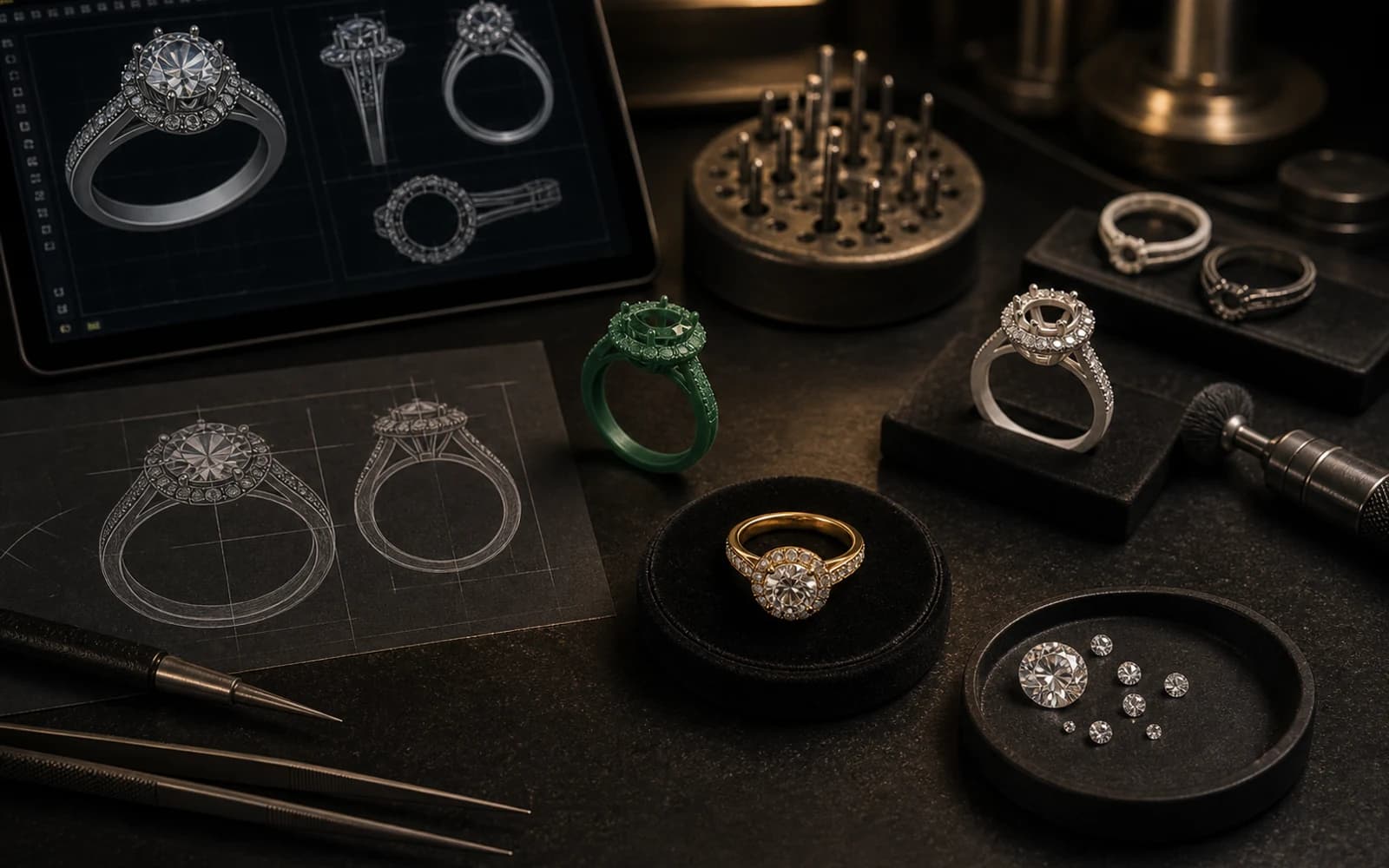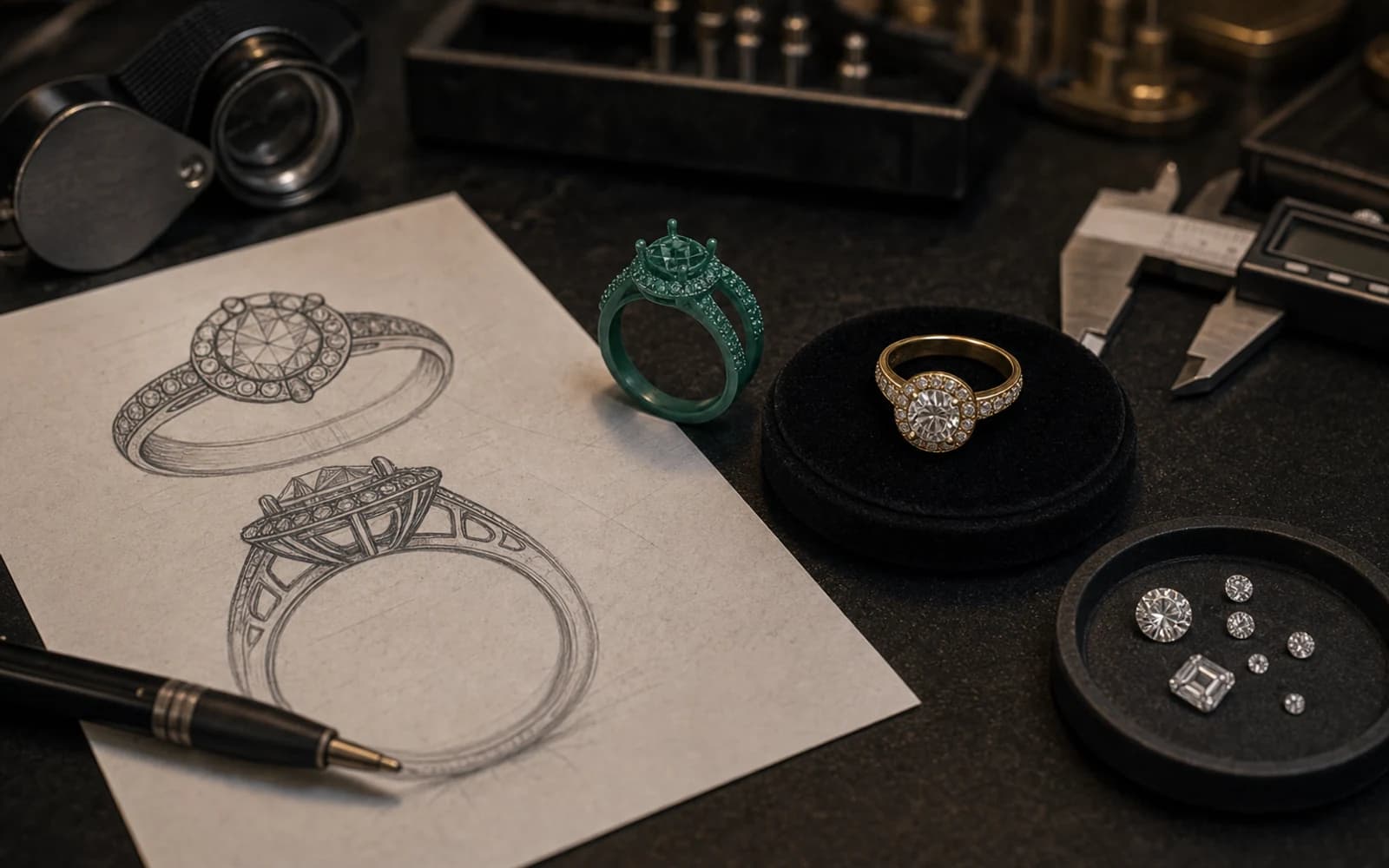
Define what the sample must prove
A sample is not only a preview. It should answer specific questions: Does the scale feel right, can the stones be set securely, does the plating tone match the brand, and is the piece comfortable enough to wear?
Before sampling starts, decide which details are essential and which details can be adjusted after the first review. That makes feedback clearer and keeps the project moving.
Prepare references and technical notes
A strong sample brief combines visual references with practical notes. The factory should understand the shape, target material, size, finish, stone direction, and whether the final product must be repeated in a larger order.
If the idea is still loose, that is acceptable. The important part is to explain the desired result and let CAD, material review, and production planning make the idea more precise.
- Mark which reference shows the silhouette.
- Mark which reference shows the surface finish.
- Confirm whether the sample is for one piece or future production.
Use sample feedback to improve the final product
Sample feedback should be practical. Instead of saying that a piece feels wrong, identify whether the issue is size, weight, surface, edge comfort, stone layout, clasp behavior, or color.
This is how a sample becomes useful. It gives the client confidence and gives the production team a concrete reference for the next version.
DMJ production note for How to Turn a Jewelry Idea Into a Production-Ready Sample
For "How to Turn a Jewelry Idea Into a Production-Ready Sample", DMJ Concept applies this production lens: For DMJ Concept, custom jewelry manufacturing is not only about making a single object. The work should make the client feel confident because design, CAD, sample making, casting, polishing, plating, stones, and final review are connected before the piece leaves Bangkok, Thailand.
How to turn a loose idea into clear sample criteria
A production-ready sample needs clear criteria. Instead of asking only for a beautiful piece, define what the sample must prove: size, weight, finish, stone layout, plating tone, enamel color, clasp strength, or whether the design can become wholesale jewelry Thailand production later.
This makes feedback more useful. If the first sample is too heavy, too delicate, or not comfortable, the next adjustment can be made in CAD or finishing with a clear reason.
- Write down the must-have visual details before CAD starts.
- Separate design taste from technical problems during sample review.
- Keep approved sample notes for repeat production.
What a factory should know before making the sample
The factory should know how the sample will be used. A sample for a private client may focus on emotion and finish, while a sample for a brand must also prove repeatability, target cost, packaging needs, and whether the item can be reordered consistently.
DMJ Concept treats sample making as a planning step, not just a preview. That means material choices, stone setting, polishing, and plating should support the final business goal instead of only looking good in one photo.
- State whether the piece must fit a retail price target.
- Confirm whether future production needs the same specifications.
- Ask for alternatives when the first idea is expensive or fragile.
Frequently Asked Questions
Do I need a perfect design before making a jewelry sample?
No. You need a clear enough direction for CAD and production review. The sample can then help refine details before a larger order.