Start with a production-ready brief
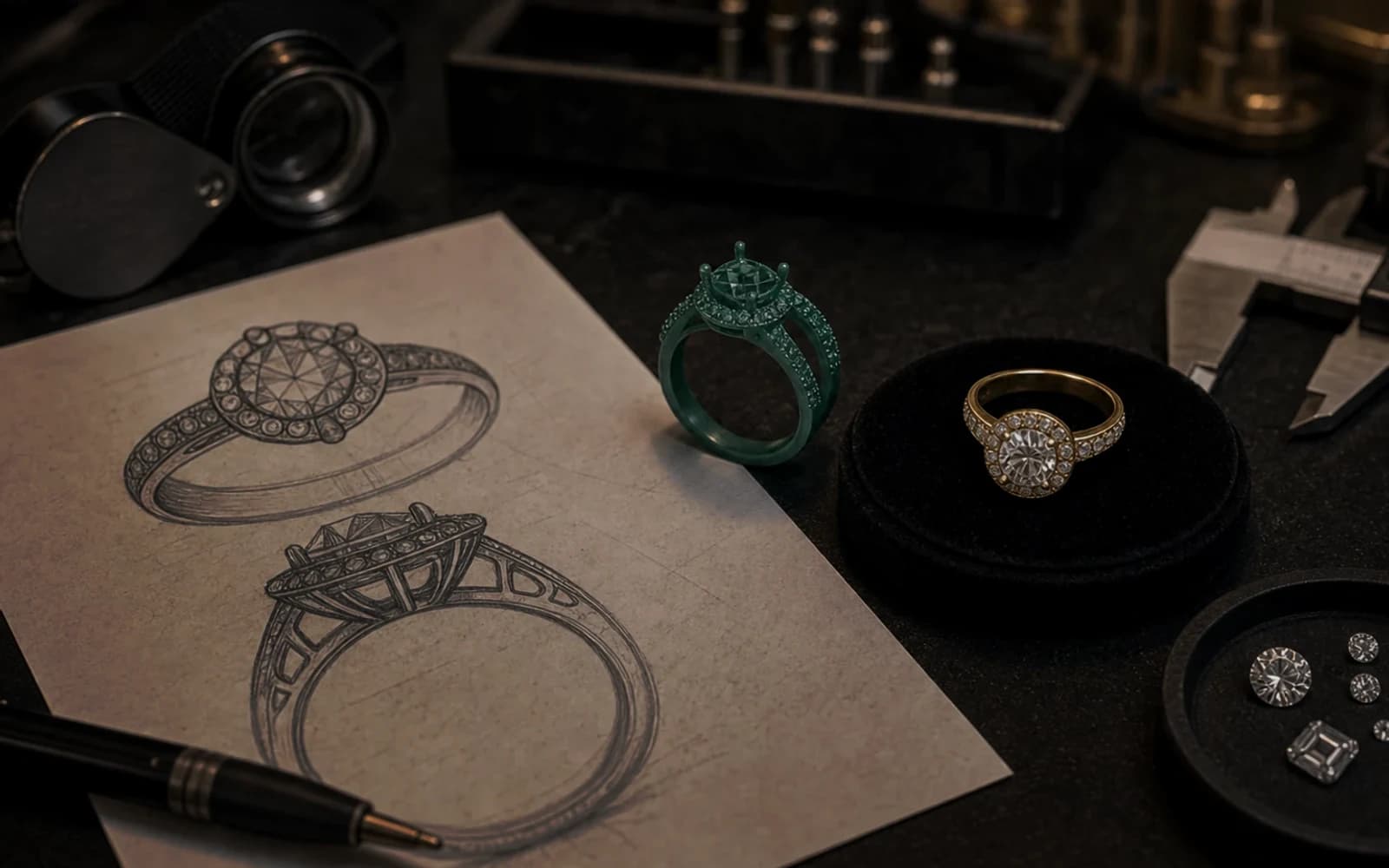
A custom jewelry project usually starts with references, a sketch, a target material, and a clear reason for the piece. The first goal is not to make every detail final. It is to understand the shape, scale, use case, budget direction, and manufacturing constraints before CAD work begins.
The strongest briefs explain what matters most: silhouette, stone layout, plating color, surface finish, size range, and whether the piece is a one-off sample or part of a repeatable collection.
- Share reference images and explain what each one is meant to show.
- Name the target material or ask for material guidance early.
- Separate must-have details from ideas that can change during review.
Move from design direction to CAD
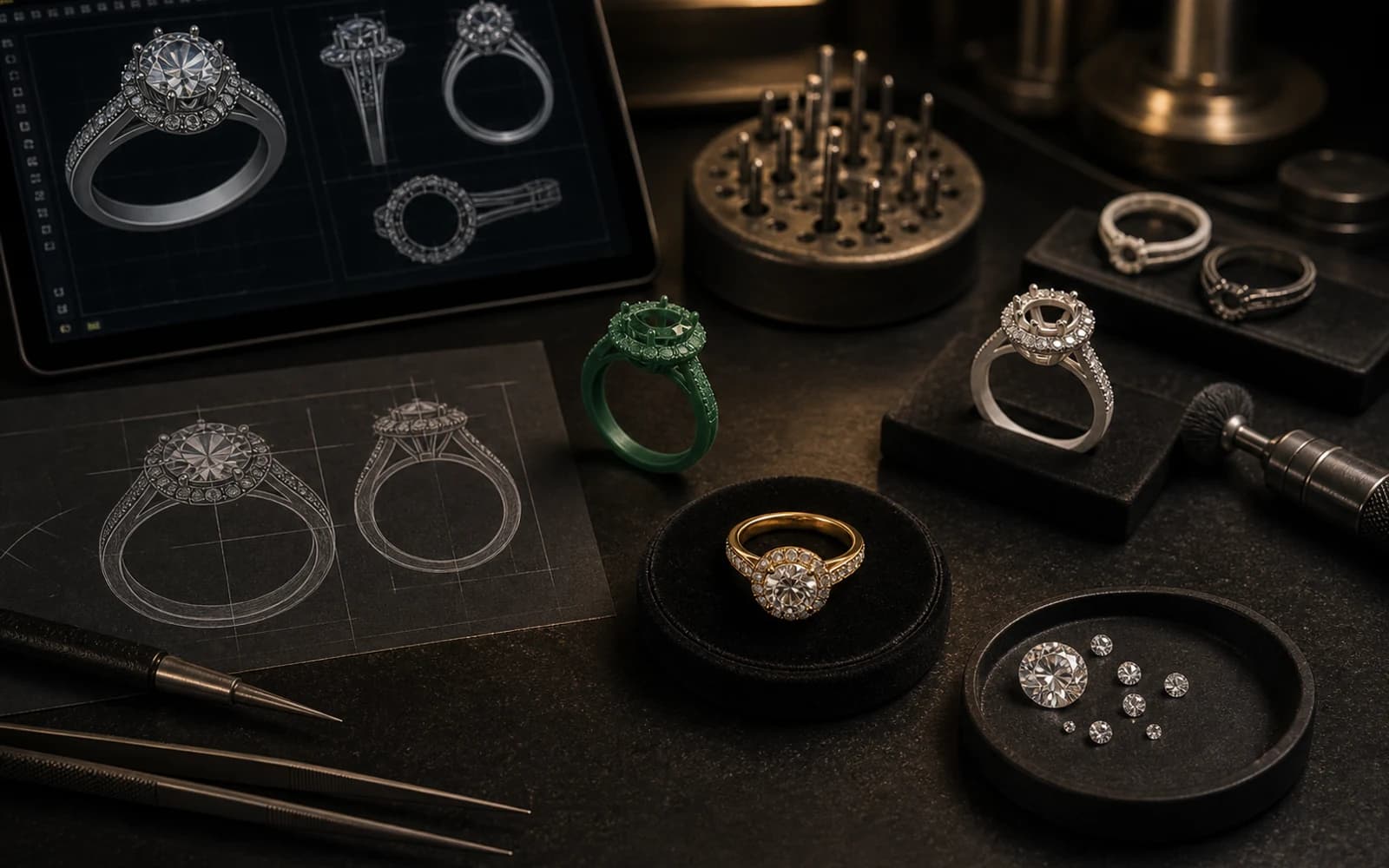
CAD turns the design direction into a model that can be checked for scale, wall thickness, stone positions, connection points, and visual balance. This step protects the project from moving too quickly into metal work before the structure is clear.
For many projects, CAD review is where the client and factory align on proportions. The goal is a model that supports the intended look and can move into sampling or production with fewer surprises.
- Review front, side, and perspective views when the form is complex.
- Check stone sizes and setting style before production begins.
- Use CAD changes to solve structural issues before casting.
Planning a custom jewelry piece?
DMJ Concept can review references, CAD requirements, materials, and production steps before the project moves into manufacturing.
Production, finishing, and final review
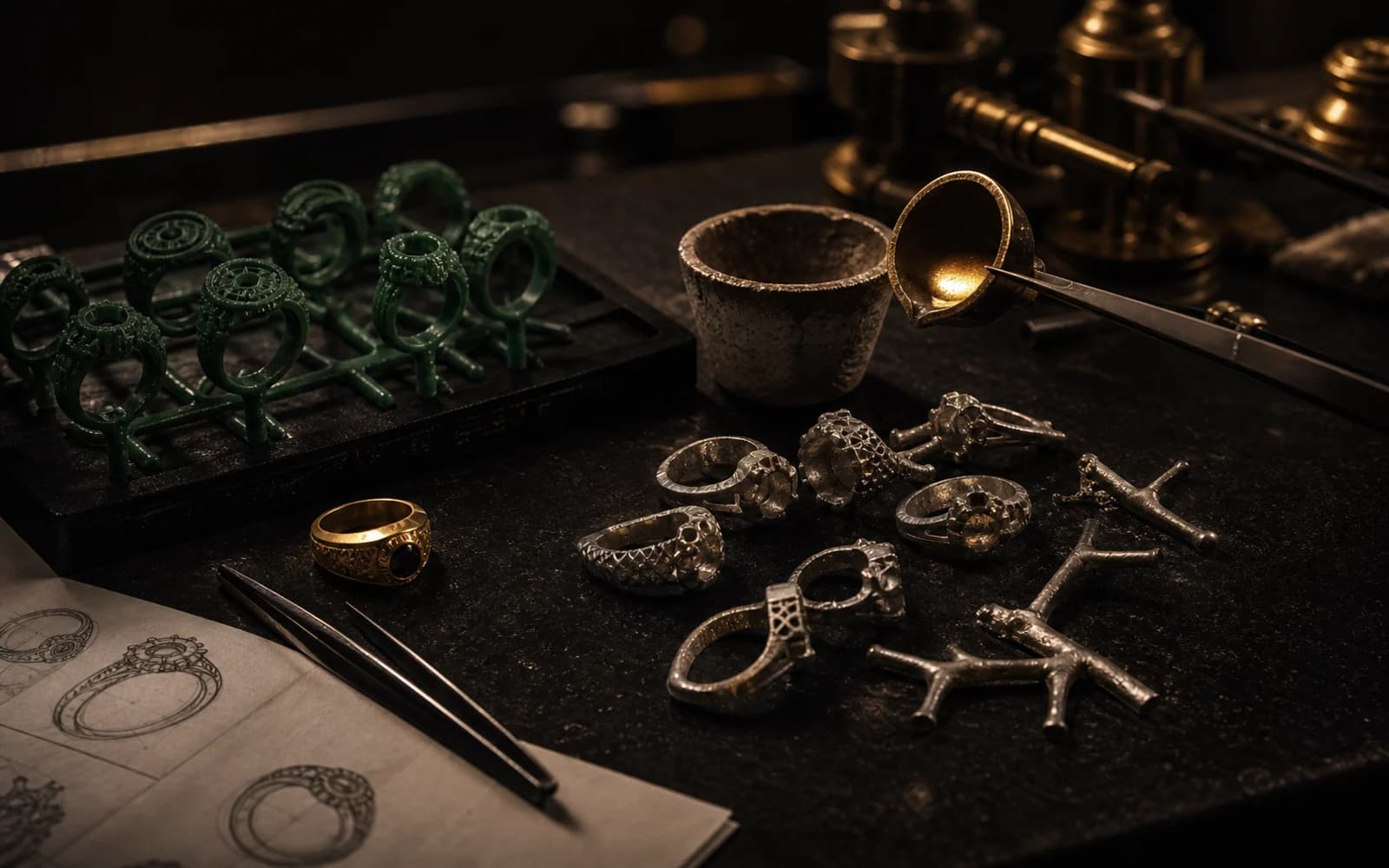
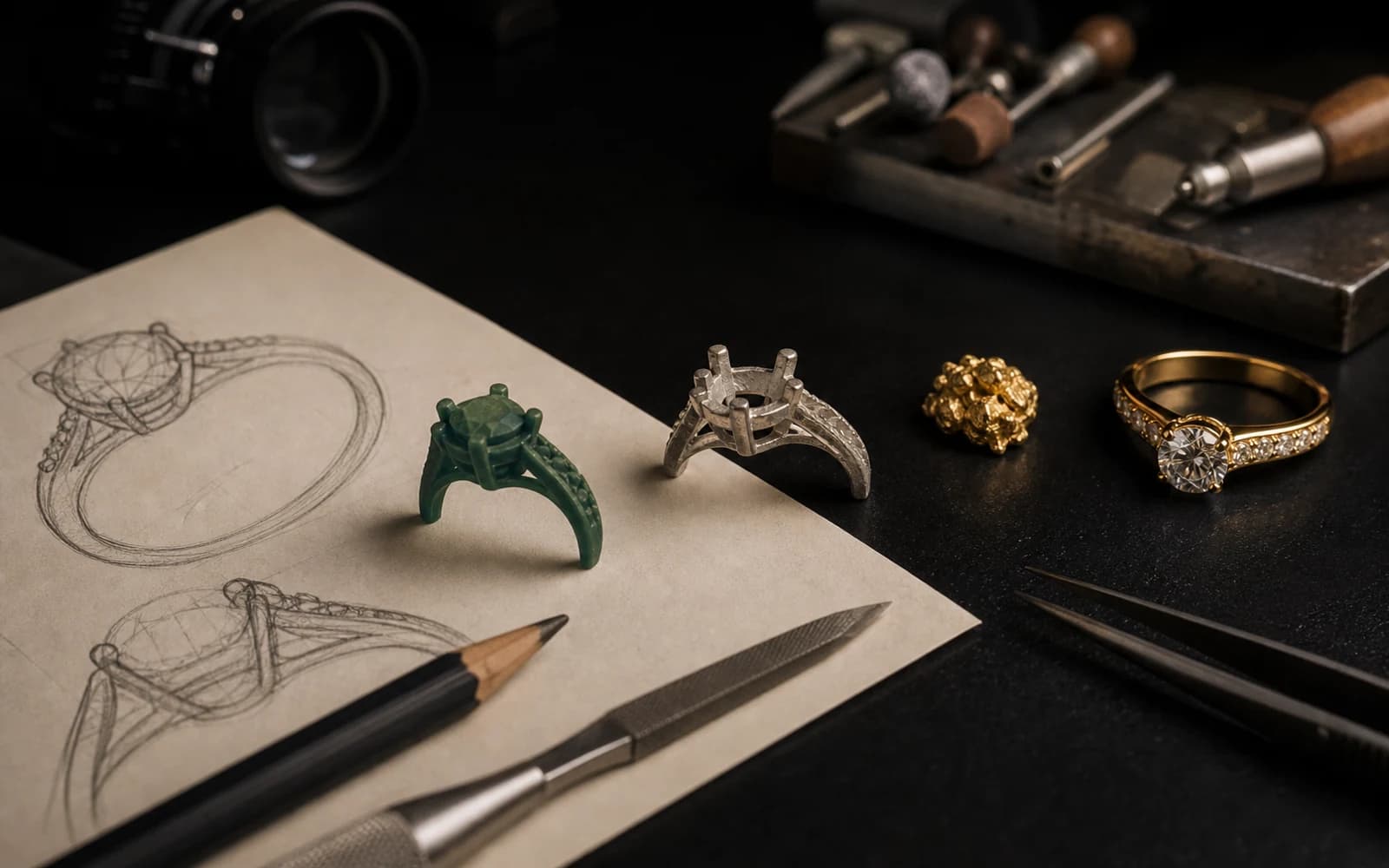
After the design is approved, the project can move through sample making, casting, polishing, stone setting, enamel, plating, or other finishing steps depending on the piece. Each stage should be checked against the original design goal, not treated as an isolated task.
Final quality control looks at the complete piece: symmetry, surface quality, stone security, plating coverage, finishing consistency, and whether the result still matches the agreed direction.
DMJ production note for How Custom Jewelry Manufacturing Works
For "How Custom Jewelry Manufacturing Works", DMJ Concept applies this production lens: For DMJ Concept, custom jewelry manufacturing is not only about making a single object. The work should make the client feel confident because design, CAD, sample making, casting, polishing, plating, stones, and final review are connected before the piece leaves Bangkok, Thailand.
Where client emotion meets production reality
A custom piece should carry emotion, but it also has to work as an object. The client may care most about how the jewelry feels when worn or gifted, while the factory must protect thickness, comfort, stone security, finish, and durability.
The best custom jewelry manufacturing process respects both sides. The idea stays meaningful, but the production path is clear enough to prevent avoidable disappointments.
- Translate the emotional goal into shape, material, and finish decisions.
- Use CAD to test the design before metal work begins.
- Use sample review to confirm the piece feels right in real life.
Why process clarity matters to the client
Clients are often afraid of ordering the wrong thing, especially when production happens remotely. Clear stages reduce that risk because the client can approve direction, CAD, sample, material, finishing, and final details step by step.
DMJ Concept helps guide the order from idea to finished piece, so the client is not left alone with an unclear factory process. That guidance is part of the service, not an extra detail.
- Know what you are paying for at each stage.
- Ask for technical alternatives when the first idea is risky.
- Keep all approvals connected to the final production plan.
Frequently Asked Questions
Do I need a finished drawing before contacting a jewelry manufacturer?
No. A rough sketch, reference images, or a clear design direction can be enough to start the manufacturing conversation.
Why does custom jewelry usually need CAD before production?
CAD helps review proportions, structure, stone placement, and manufacturing details before the piece moves into sampling or casting.