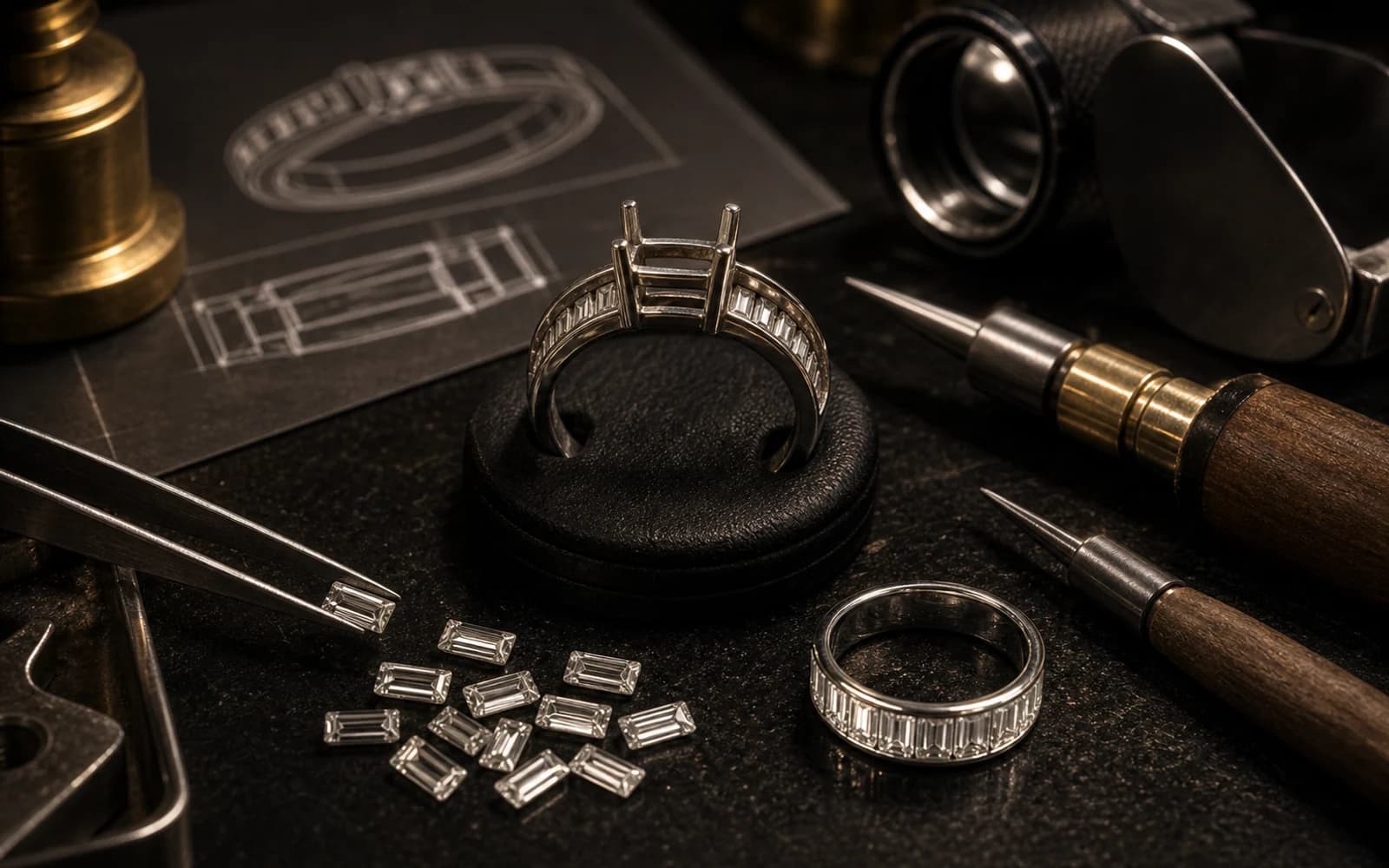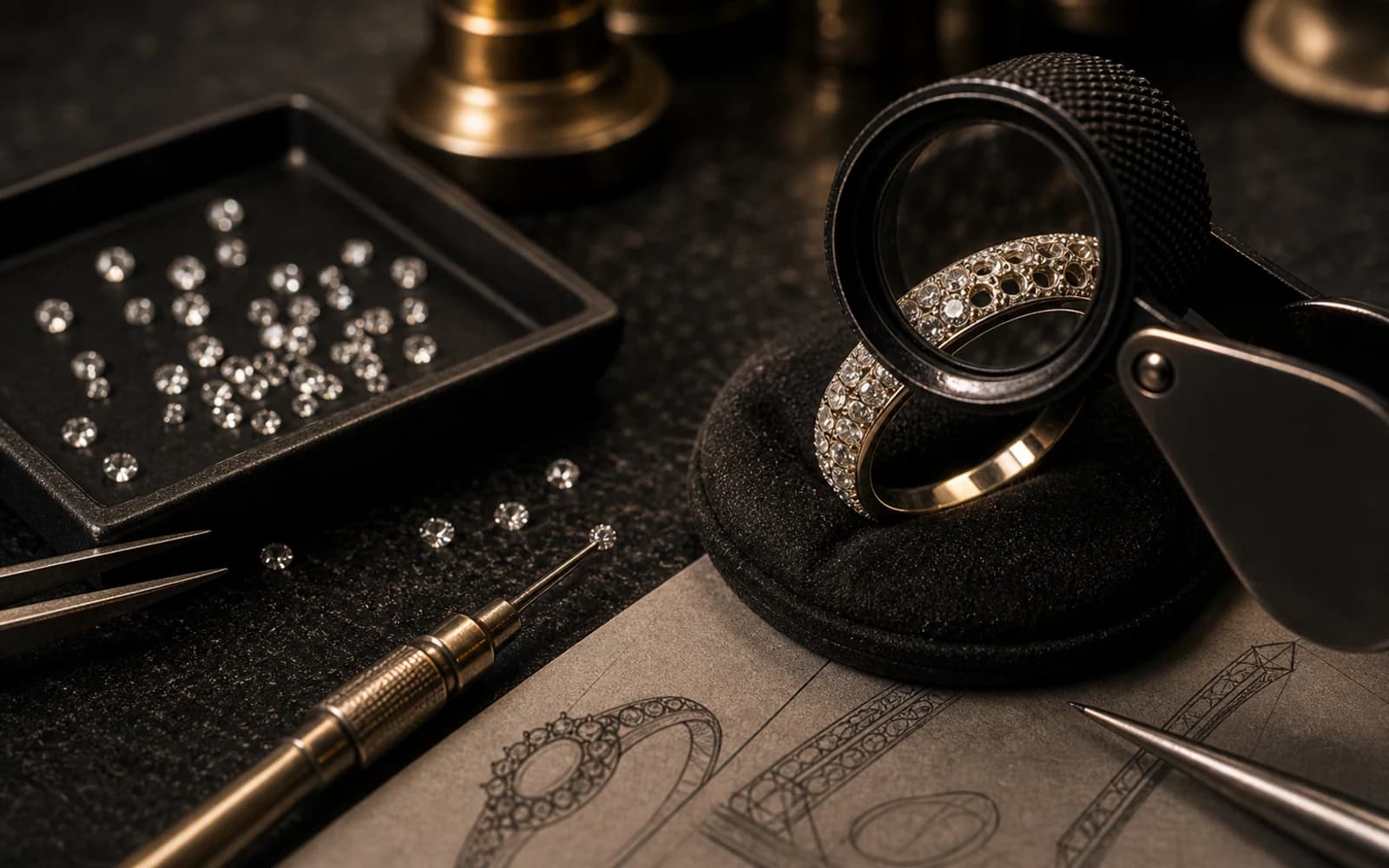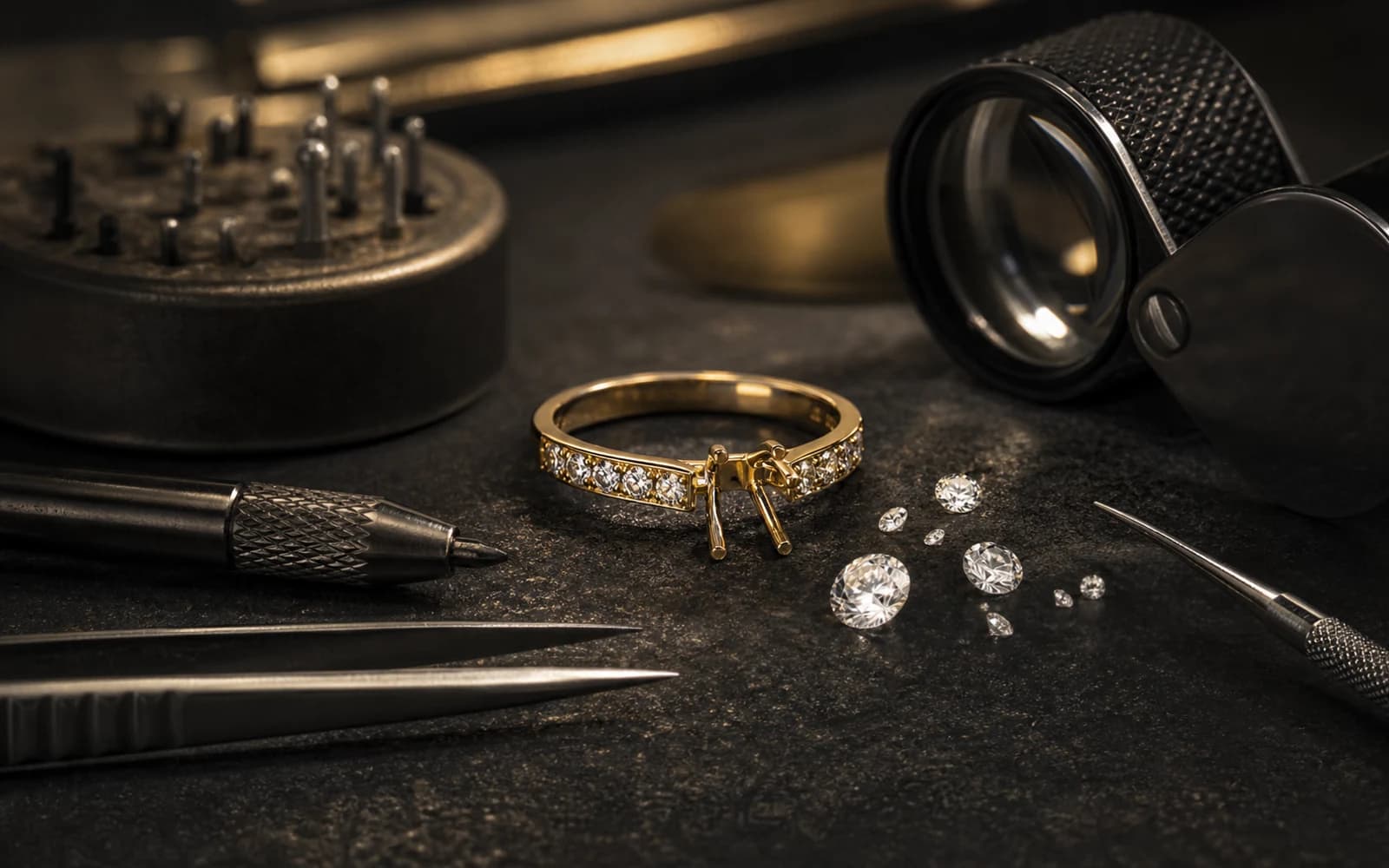
Stone setting begins in the design stage
A stone is not simply added at the end. The setting style, stone size, seat depth, metal support, and surrounding surface should be planned during CAD review.
This helps the finished jewelry look balanced and helps the setter work with a structure that supports the stones properly.
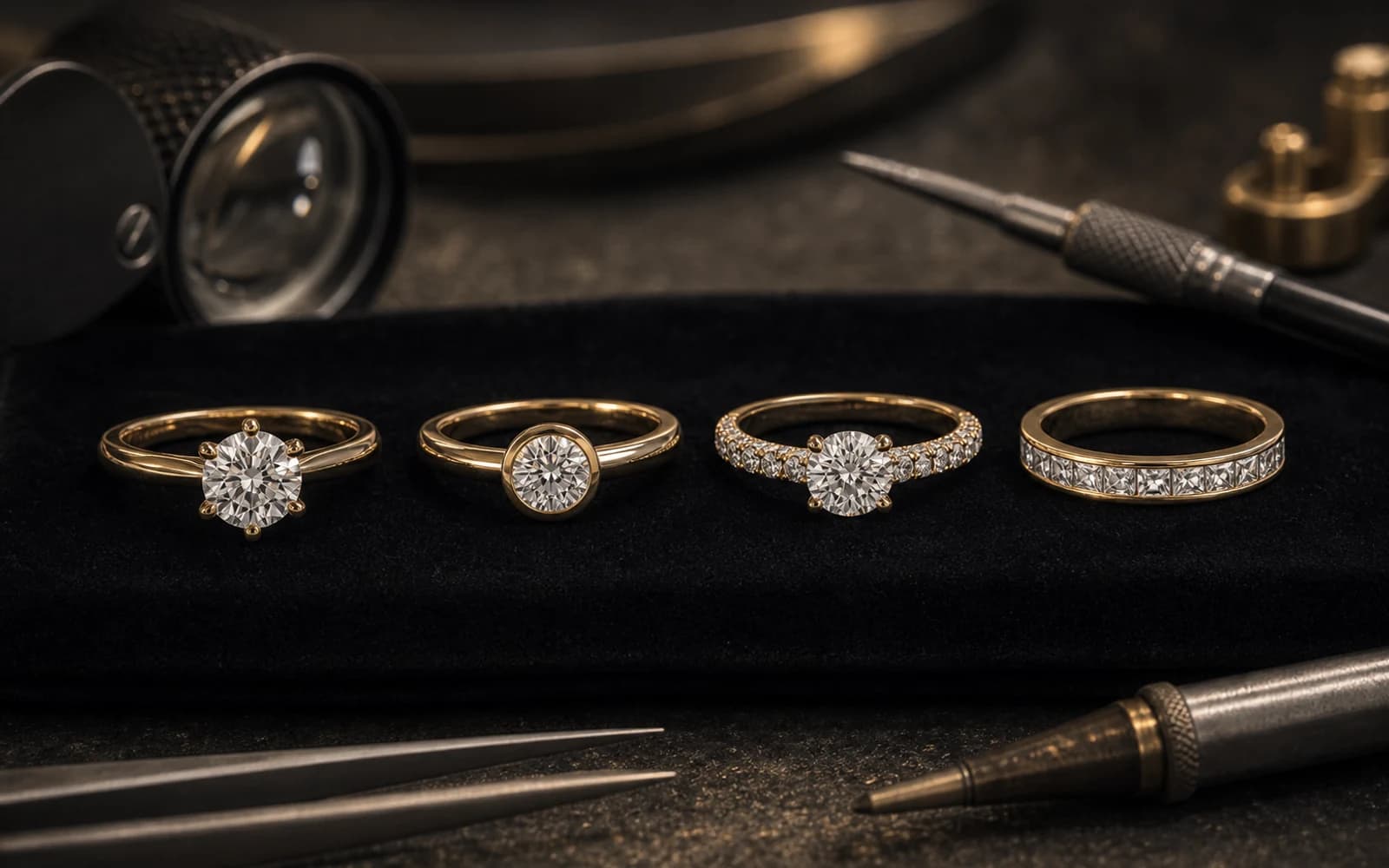
Choose a setting style for both look and function
Prong, bezel, pave, channel, and other setting styles each change the appearance and durability of a piece. A delicate look may need more technical support than the reference image suggests.
The correct style depends on the stone, wear pattern, design scale, material, and customer expectation.
- Confirm stone size and shape before CAD is finalized.
- Review whether the setting style fits daily wear or occasional wear.
- Inspect alignment and security after setting.
Final inspection should include every stone
Stone setting quality is visible in small details: alignment, height, spacing, security, symmetry, and whether the metal work feels clean around the stone.
Those small details are part of why jewelry looks expensive when viewed closely.
DMJ production note for Stone Setting in Custom Jewelry Production
For "Stone Setting in Custom Jewelry Production", DMJ Concept applies this production lens: Stone work, enamel, and color details need early planning in Bangkok production. DMJ Concept connects stone sourcing, stone cutting, setting, enamel areas, polishing, plating, and QC so small details support the full jewelry piece.
What stone setting must solve technically
Stone setting is not only decorative. The setting must hold the stone securely, protect the stone during wear, support the design proportions, and allow the surface to be polished or plated without damaging the final look.
CAD should account for stone size, seat depth, prong thickness, bezel height, and cleaning access. These decisions protect the piece before the setter begins work.
- Confirm stone sizes before CAD is finalized.
- Choose the setting style based on wear, not only appearance.
- Inspect stone security after finishing, not only after setting.
Why stone setting matters for brand consistency
For a brand, one well-set stone is not enough. Every piece in a batch should show the same alignment, spacing, height, and security. Small variations are visible to customers and can affect trust.
This is why jewelry production in Thailand should include setting checks as part of the QC workflow. Stone layout, polishing, and plating all have to work together.
- Compare stone height across multiple pieces in a batch.
- Check that stones are level and aligned from several angles.
- Document accepted stone quality and color range.
Frequently Asked Questions
When should stone setting be planned?
Stone setting should be planned during CAD and production review, before casting and finishing decisions become fixed.