Setting style changes the whole design
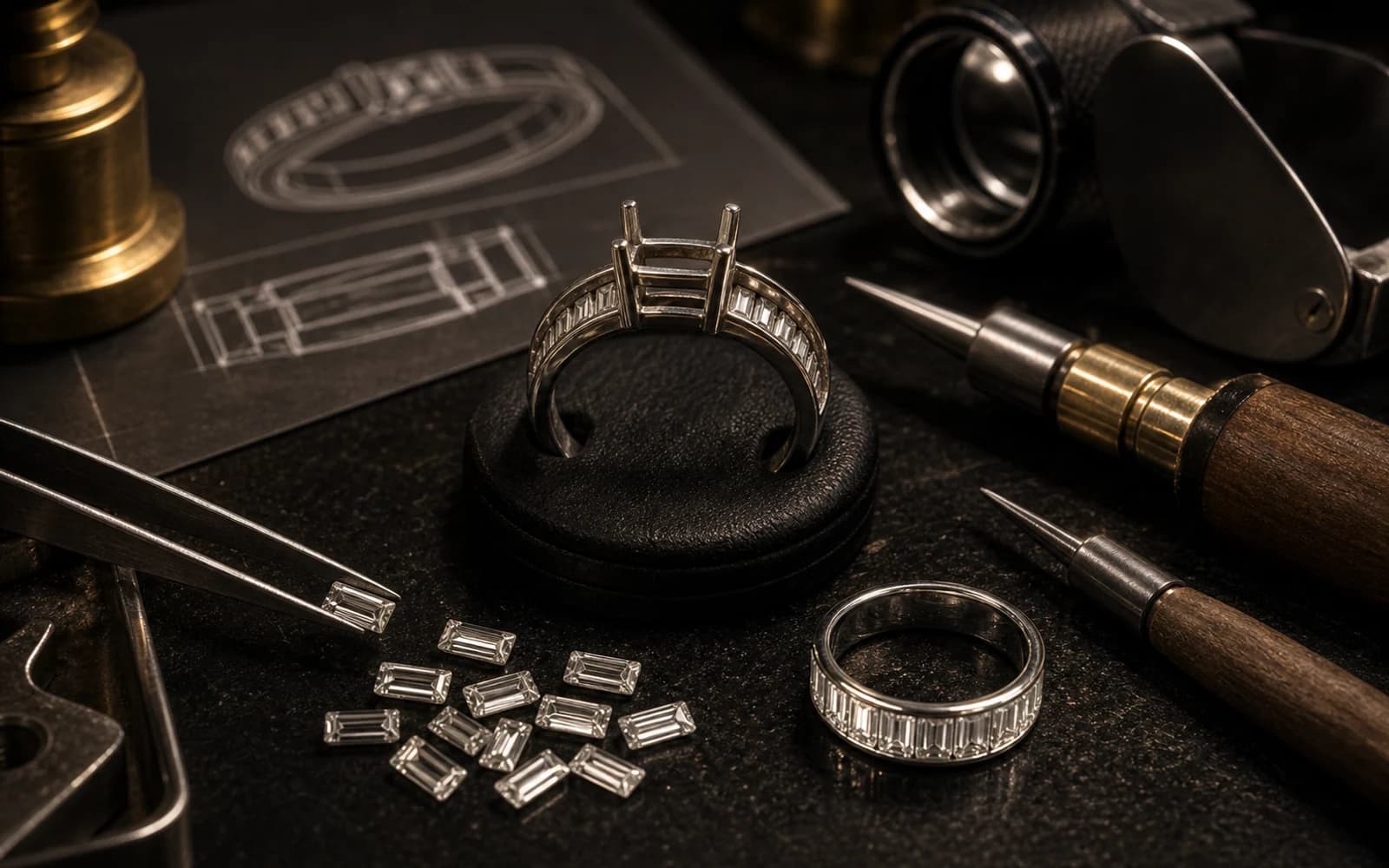
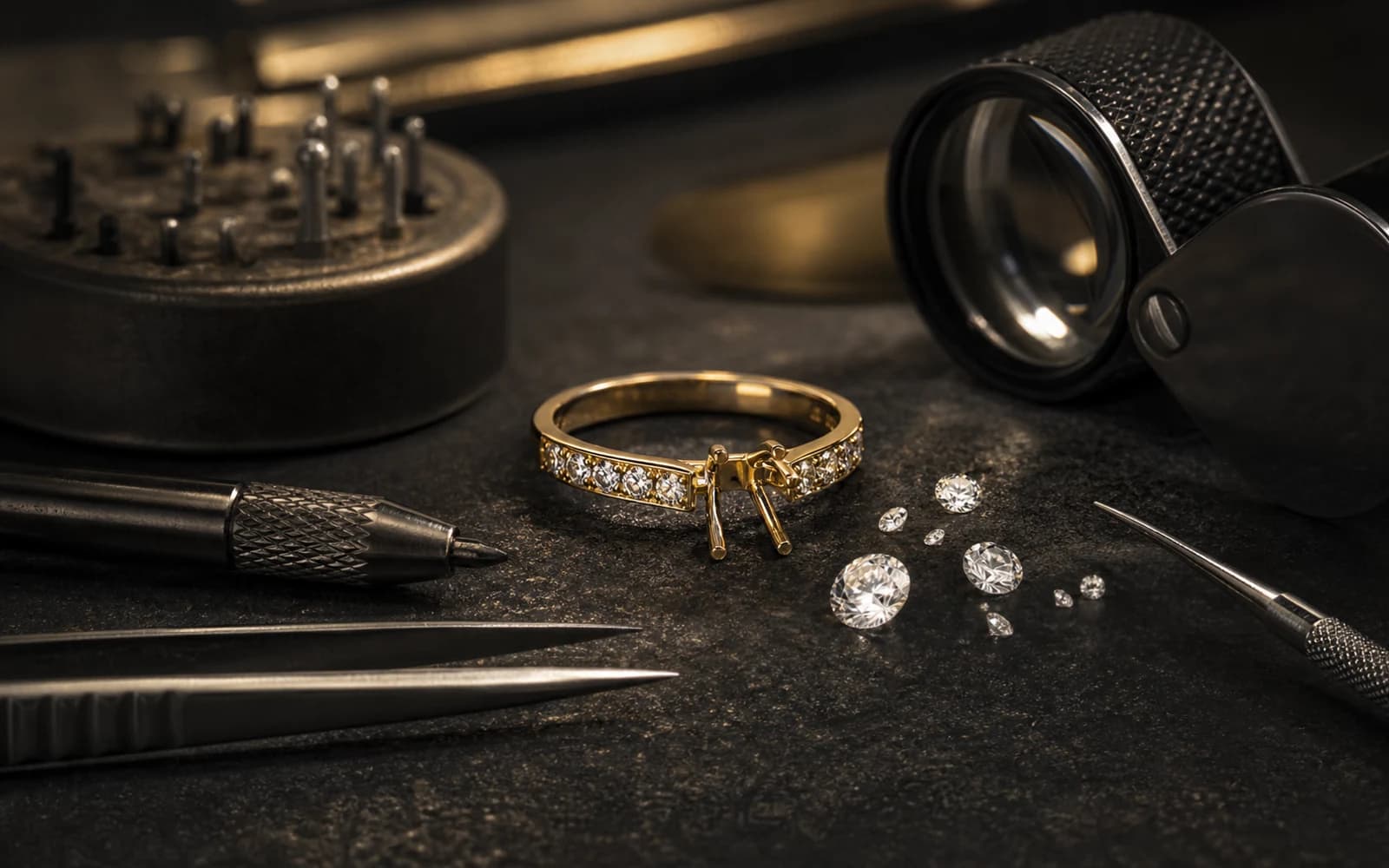
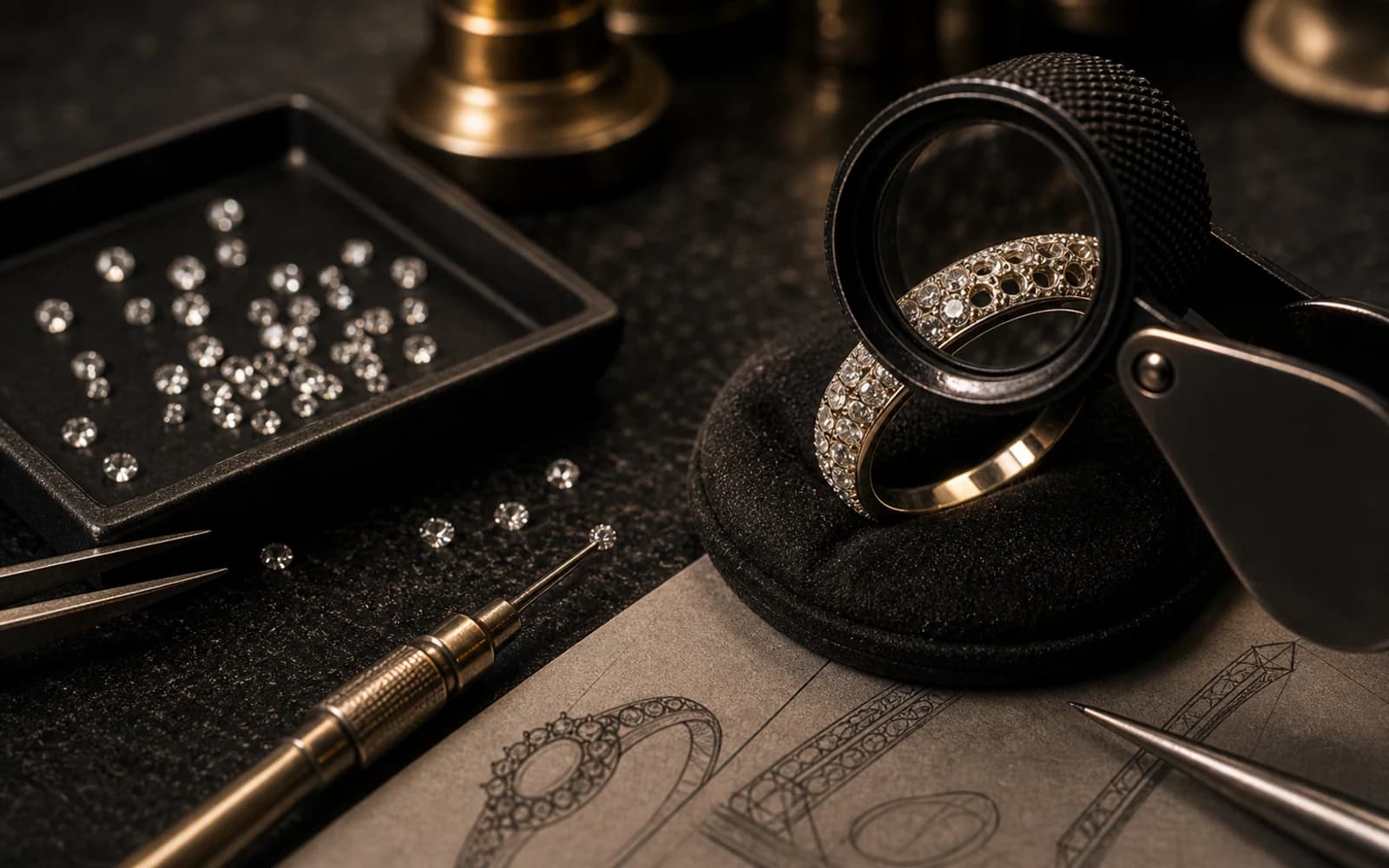
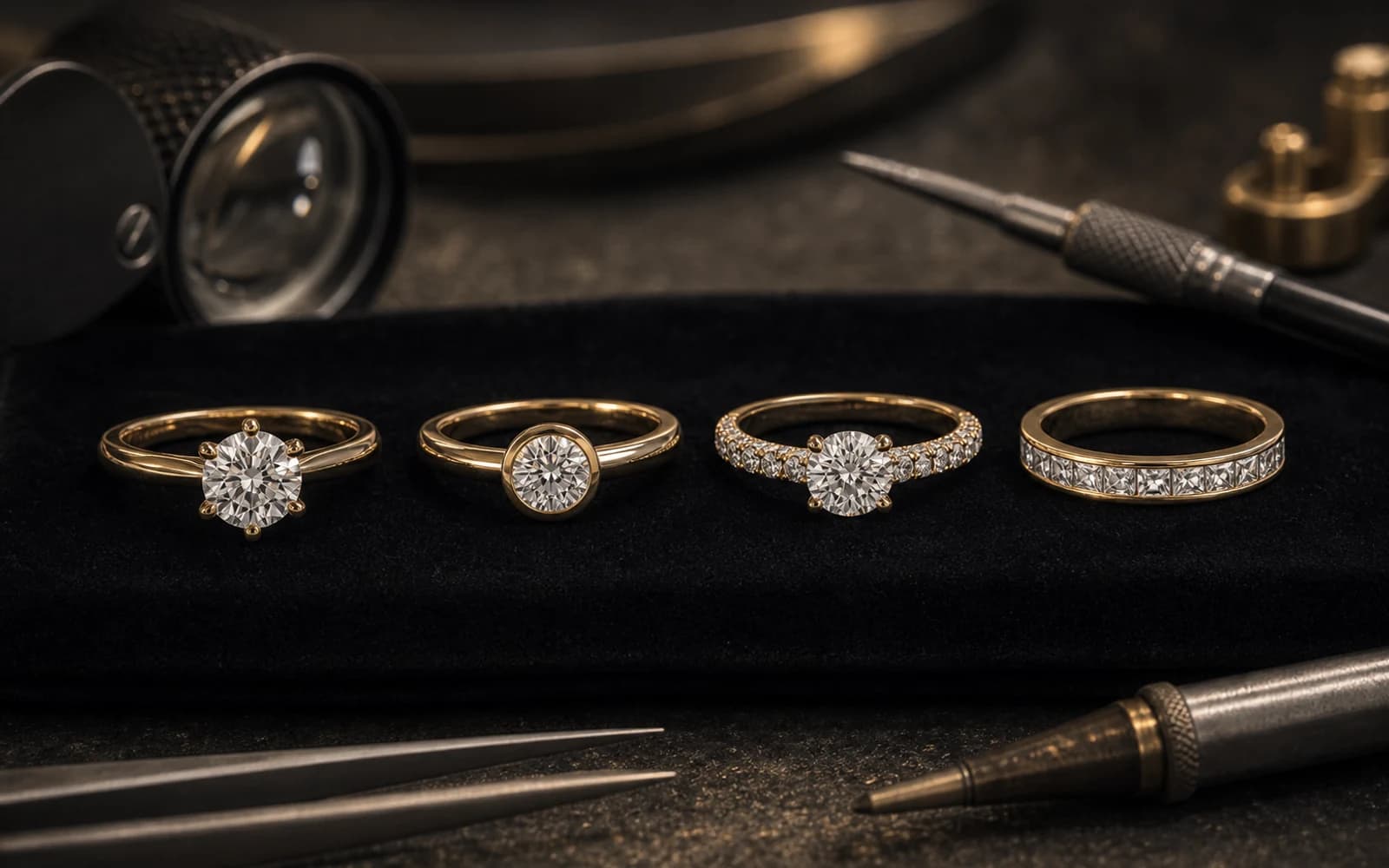
A gemstone setting is both a visual decision and a technical decision. Prong settings show more stone, bezel settings feel protected, pave creates surface sparkle, and channel settings can create a cleaner line.
The right choice depends on stone size, design style, wear pattern, material, and how the piece should be produced.
CAD should support the chosen setting
The setting style should be planned in the CAD model so the stone seat, metal thickness, and surrounding surfaces are ready for production.
If the setting is decided too late, the design may need structural changes before it can be produced safely.
- Use prongs when the design should show more stone.
- Use bezel when protection and clean borders matter.
- Use pave or channel only when spacing and tolerances are planned carefully.
Inspect settings for alignment and security
A finished piece should be checked stone by stone. Alignment, height, spacing, and security all affect whether the jewelry feels premium and reliable.
Small setting details are often where clients notice quality first.
DMJ production note for Gemstone Setting Styles: Prong, Bezel, Pave, and Channel
For "Gemstone Setting Styles: Prong, Bezel, Pave, and Channel", DMJ Concept applies this production lens: Stone work, enamel, and color details need early planning in Bangkok production. DMJ Concept connects stone sourcing, stone cutting, setting, enamel areas, polishing, plating, and QC so small details support the full jewelry piece.
How to match setting style to use case
Prong, bezel, pave, and channel settings each solve a different problem. Prongs show more stone, bezels protect edges, pave creates surface sparkle, and channel settings can support cleaner lines across bands or geometric pieces.
The right choice depends on stone size, wear expectations, visual style, and the metal around the stone. CAD review should test the setting before production begins.
- Use prongs when light return and stone visibility matter.
- Use bezels when protection and clean edges matter.
- Use pave or channel settings only when spacing and QC can be controlled.
Quality checks for stone settings
A setting style should be checked from the top, side, and underside. The stone should sit securely, the metal should not feel sharp, and the setting should look consistent across all stones.
For bulk production, the factory should compare multiple pieces rather than approving only one beautiful sample. This protects the consistency of the whole collection.
- Check that prongs are even and not over-polished.
- Check bezel edges for smoothness and consistent height.
- Check pave and channel rows for alignment and secure stones.
Frequently Asked Questions
Which gemstone setting style is best?
There is no single best style. The right setting depends on the stone, design, wear pattern, durability needs, and production method.