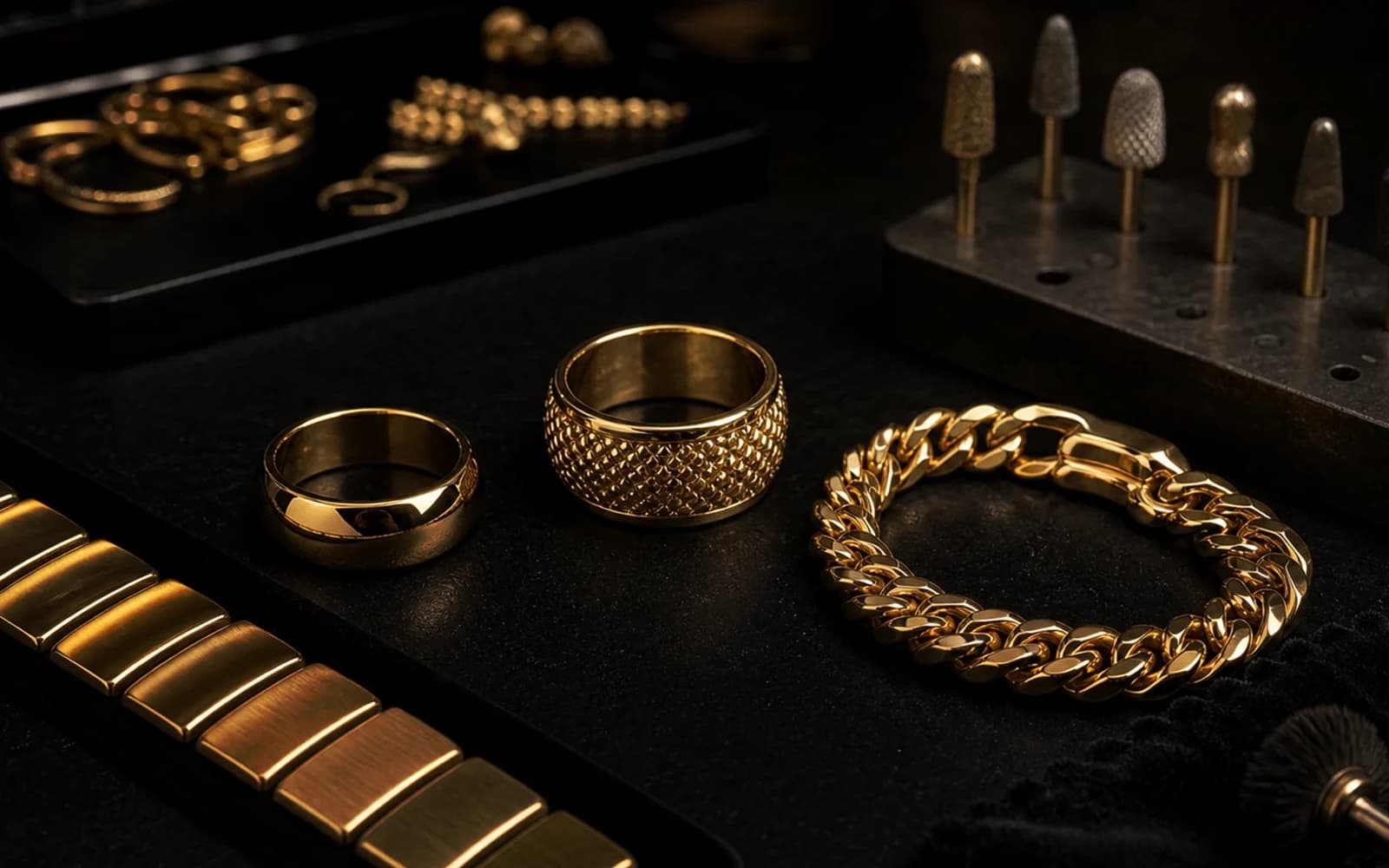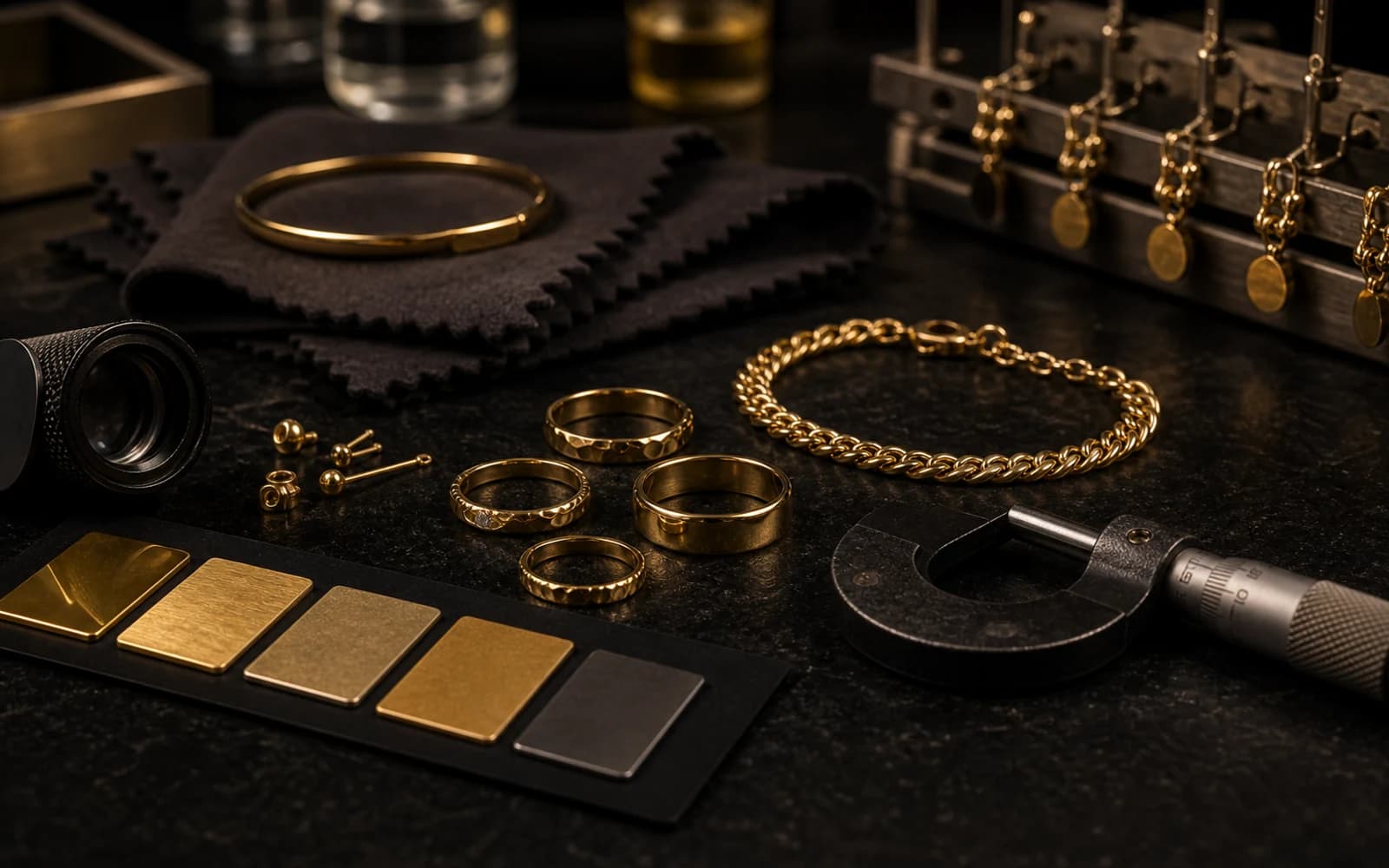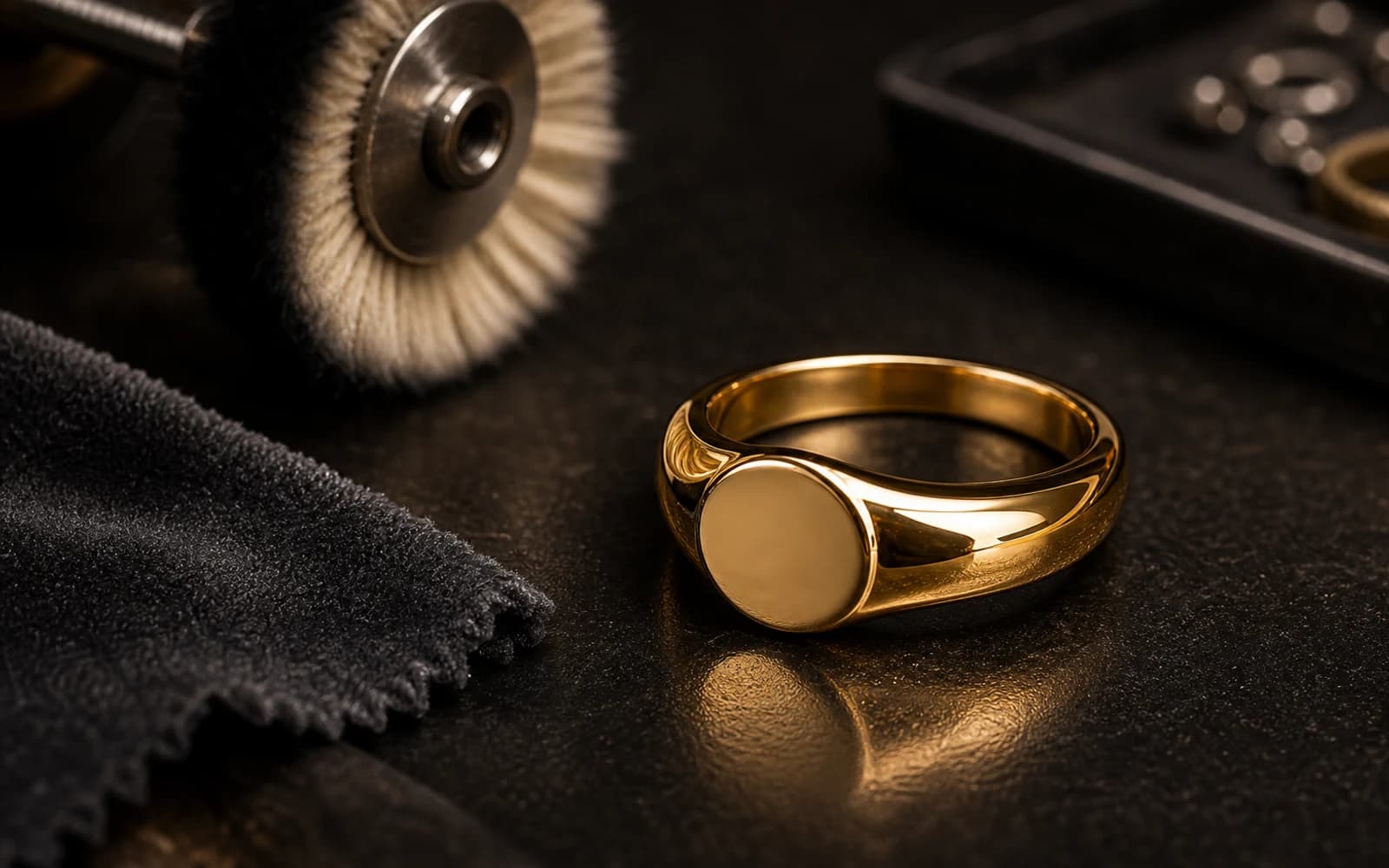
Polishing controls the visual value of a piece
Two pieces with the same design can feel very different after polishing. A clean surface can make the jewelry look expensive, while uneven finishing can make a strong design feel unfinished.
Polishing affects reflections, edge comfort, plating quality, and how clearly stones or enamel details stand out.
Different finishes create different moods
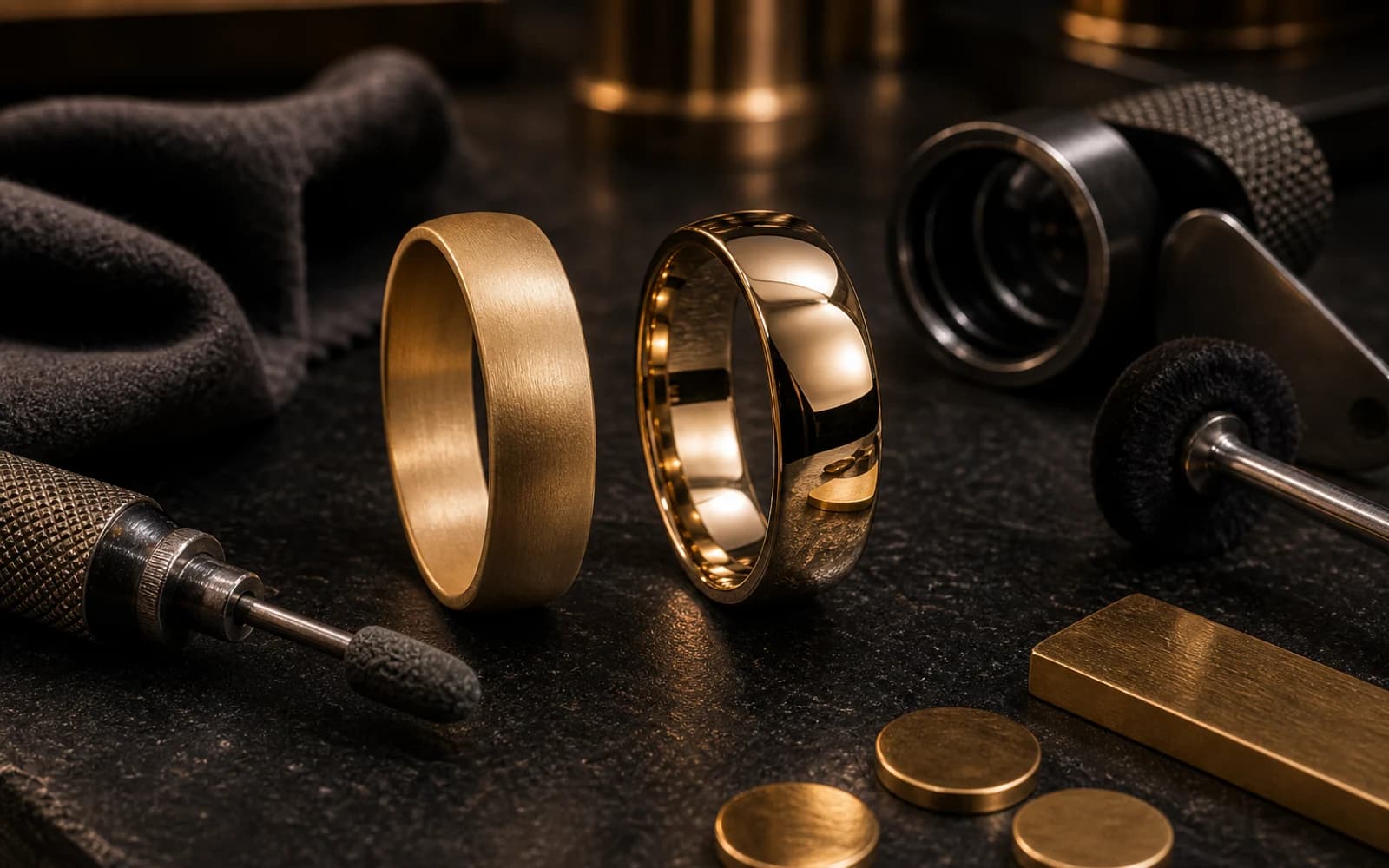
Mirror polish, satin, brushed, hammered, and matte finishes each communicate a different product position. The best choice depends on brand style, material, stone use, and expected wear.
A high shine is not always the best answer. Sometimes a softer finish makes a design feel more refined and hides normal handling better.
- Use mirror polish for sharp light reflection.
- Use satin or brushed surfaces for a softer luxury feel.
- Use texture carefully so it supports the design instead of hiding poor surface work.
Polishing should be reviewed before plating
Plating can make a piece look warmer or more valuable, but it cannot fully hide weak surface preparation. If the surface is uneven before plating, the final color may still look uncontrolled.
That is why polishing is part of the production process, not just a final cosmetic step.
DMJ production note for How Polishing Changes the Final Look of Jewelry
For "How Polishing Changes the Final Look of Jewelry", DMJ Concept applies this production lens: Gold jewelry Thailand projects depend on more than color. DMJ Concept looks at base metal, polishing, plating tone, stone setting, and quality control so thailand gold jewelry and plated jewelry both feel intentional at the final review.
Why polishing is a design decision
Polishing is often treated as a finishing step, but it changes the design itself. A high polish can make a piece look sharper and more luxurious, while satin or brushed areas can make the same form feel quieter and more architectural.
The decision should match the target buyer and the material. Brass, silver, gold plating, and stone-set pieces can all respond differently to polishing and surface preparation.
- Decide polish style before approving the sample.
- Check whether texture will survive plating and wear.
- Review corners and recesses where polishing can be uneven.
Common polishing problems to prevent
Over-polishing can soften edges, change small details, and make engraved or enamel areas less crisp. Under-polishing can leave casting marks, uneven surfaces, or a dull finish that makes the piece look unfinished.
A good production workflow checks polish at the sample stage and again before delivery. This protects the visual standard the client approved before moving into a larger order.
- Inspect detailed areas under magnification.
- Compare the finished sample with the approved CAD or reference.
- Check the back side, inside surfaces, and hidden edges.
Frequently Asked Questions
Does polishing affect gold plating?
Yes. Polishing and surface preparation affect how clean, even, and premium gold plating looks on the finished jewelry.