Base metal changes the production conversation
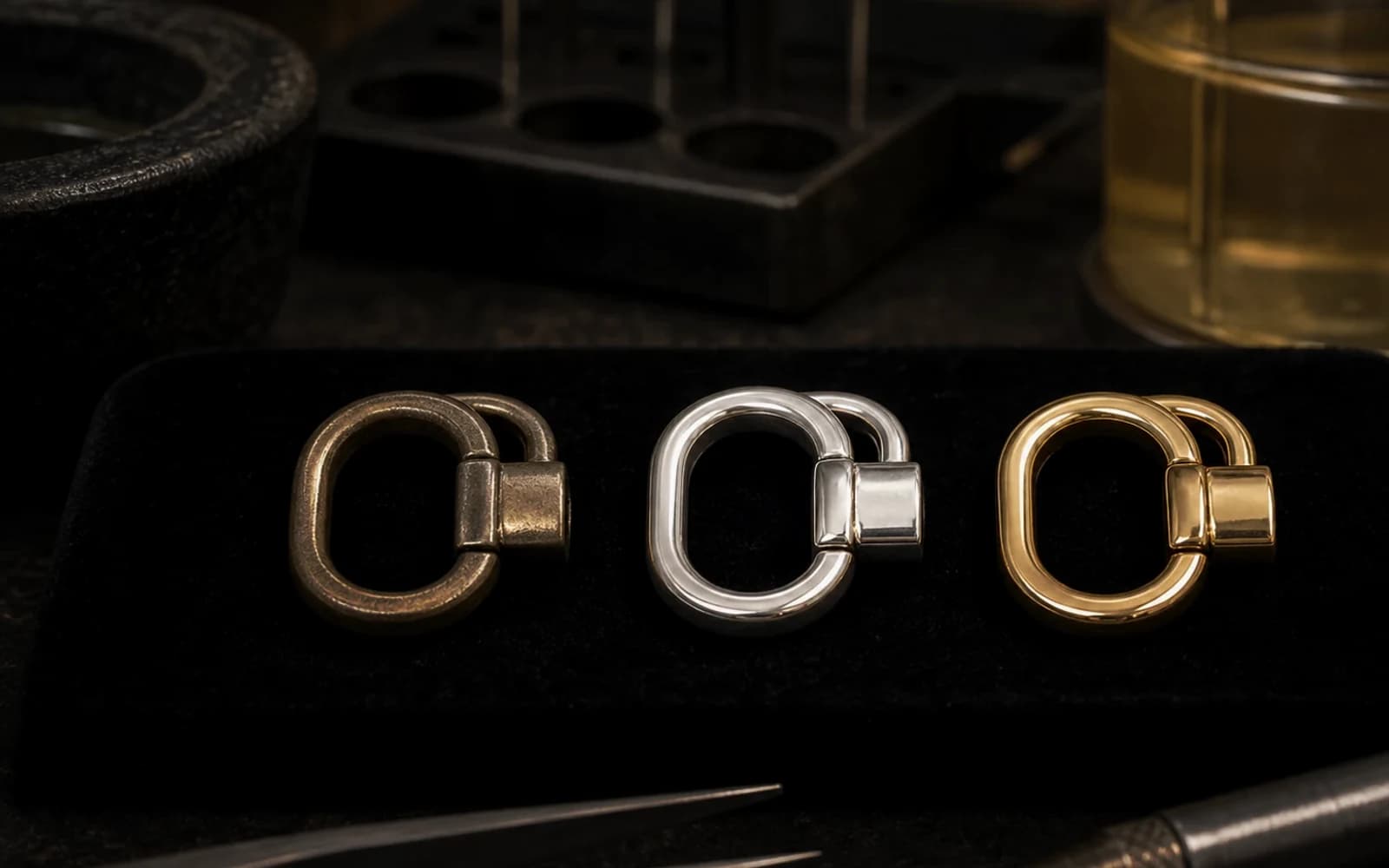
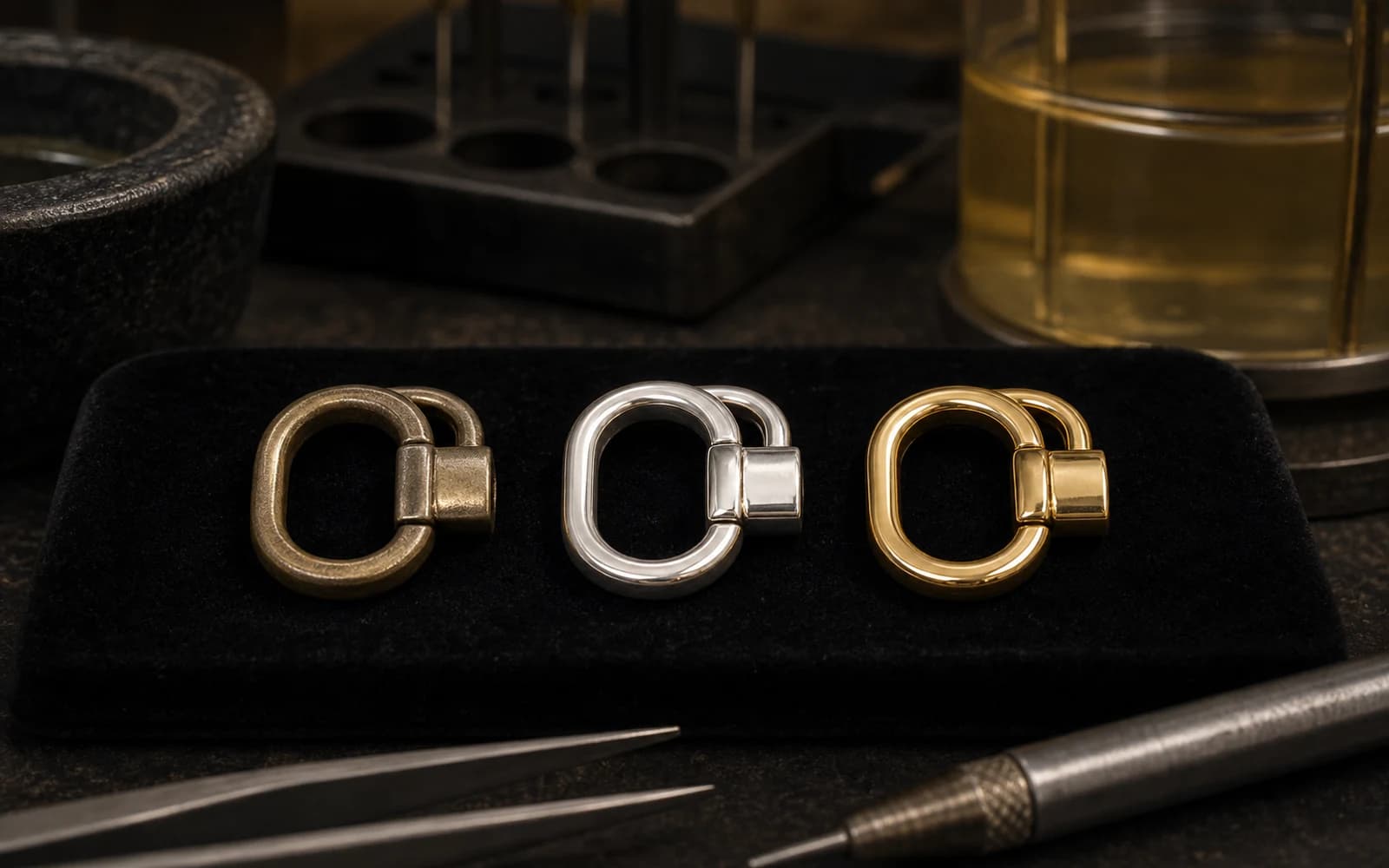
Gold plating is a surface finish, but the base metal still matters. Brass is often chosen for fashion jewelry, larger statement forms, and projects where cost control is important. 925 silver is usually positioned closer to precious jewelry and can affect the client expectation around value and care.
The right choice depends on the product category, target customer, price point, expected wear, and how the piece will be presented.
Surface preparation is critical
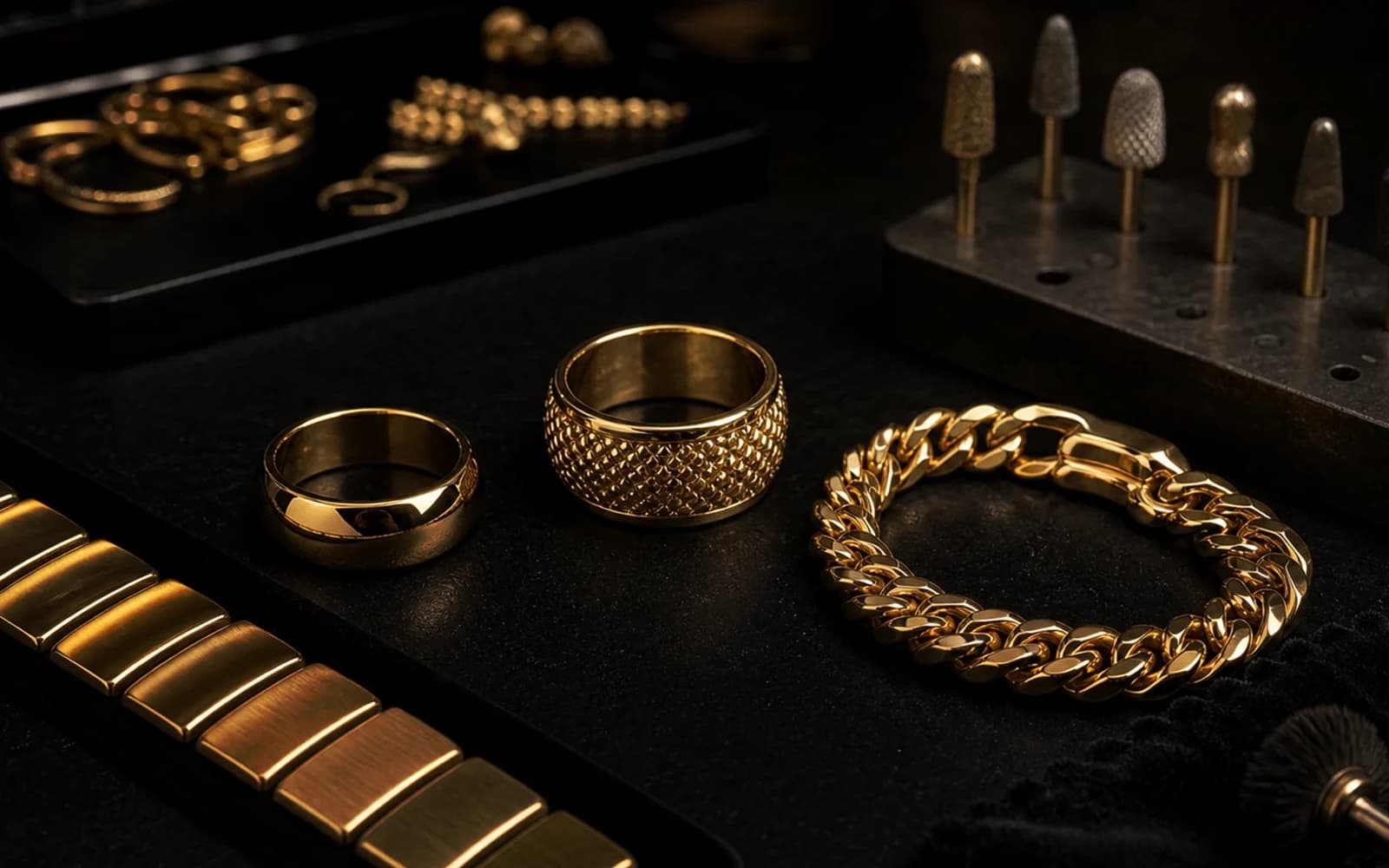
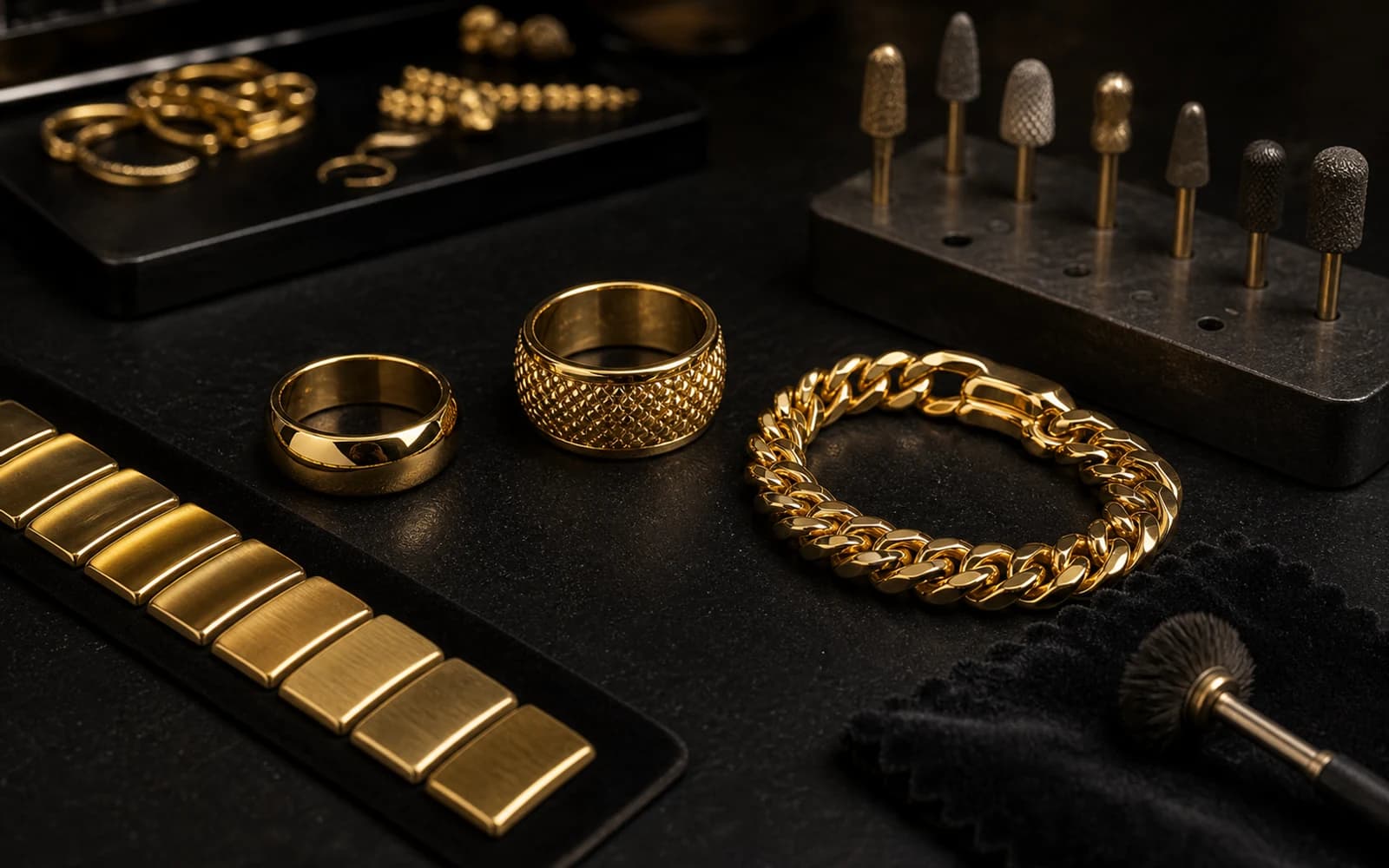
Plating quality depends on what happens before the final color is applied. Casting quality, polishing, cleaning, and surface consistency all affect the finished result.
A polished surface can make gold plating look cleaner and more premium. Uneven surfaces, sharp unplanned edges, or poor preparation can make the finish look less controlled.
- Review surface finish before plating, not only after.
- Confirm the desired gold tone and final look early.
- Discuss the base metal based on use case, not only material name.
Need help choosing a plated jewelry base?
DMJ Concept can review brass, 925 silver, and finishing options for custom jewelry production in Thailand.
How to choose between brass and silver
Choose brass when the project is design-led, cost-sensitive, or planned as fashion jewelry. Choose 925 silver when the brand or client expects a precious metal base, a different price position, or a stronger material story.
Neither option should be selected only because it can be plated. The base metal should support the project goal, the finishing method, and the way the finished piece will be sold or worn.
DMJ production note for Gold Plating on Brass vs Silver Jewelry
For "Gold Plating on Brass vs Silver Jewelry", DMJ Concept applies this production lens: Gold jewelry Thailand projects depend on more than color. DMJ Concept looks at base metal, polishing, plating tone, stone setting, and quality control so thailand gold jewelry and plated jewelry both feel intentional at the final review.
How the base metal changes the plating decision
Gold plating on brass and silver can both look premium when prepared correctly, but the base metal changes cost, product positioning, and customer expectation. Brass often supports fashion jewelry and controlled budgets. Silver can support a higher perceived value.
The plating result depends on surface preparation, polish, coating choices, and final QC. A weak base surface will not become luxury simply because it receives gold color.
- Use brass when cost control and bold forms matter.
- Use silver when the customer expects precious metal value.
- Inspect plating around edges, recesses, and stone settings.
What clients should decide before plating
Before plating, the client should decide the expected wear, retail positioning, color tone, and acceptable maintenance. A fashion piece and a long-term daily-wear piece should not be treated the same way.
DMJ Concept can help compare brass jewelry, 925 silver, and gold plating options so the final piece looks expensive without ignoring budget or durability.
- Confirm gold tone with references or a sample.
- Choose finish style before plating begins.
- Plan QC for color consistency across the batch.
Frequently Asked Questions
Is gold plated brass always lower quality than gold plated silver?
No. The right base depends on the project. Brass can be appropriate for many fashion jewelry designs, while silver may suit a more precious positioning.
Can both brass and 925 silver be used for custom jewelry production?
Yes. Both can be used, but the project should review cost, finish, use case, and customer expectations before choosing.