Enamel needs design boundaries
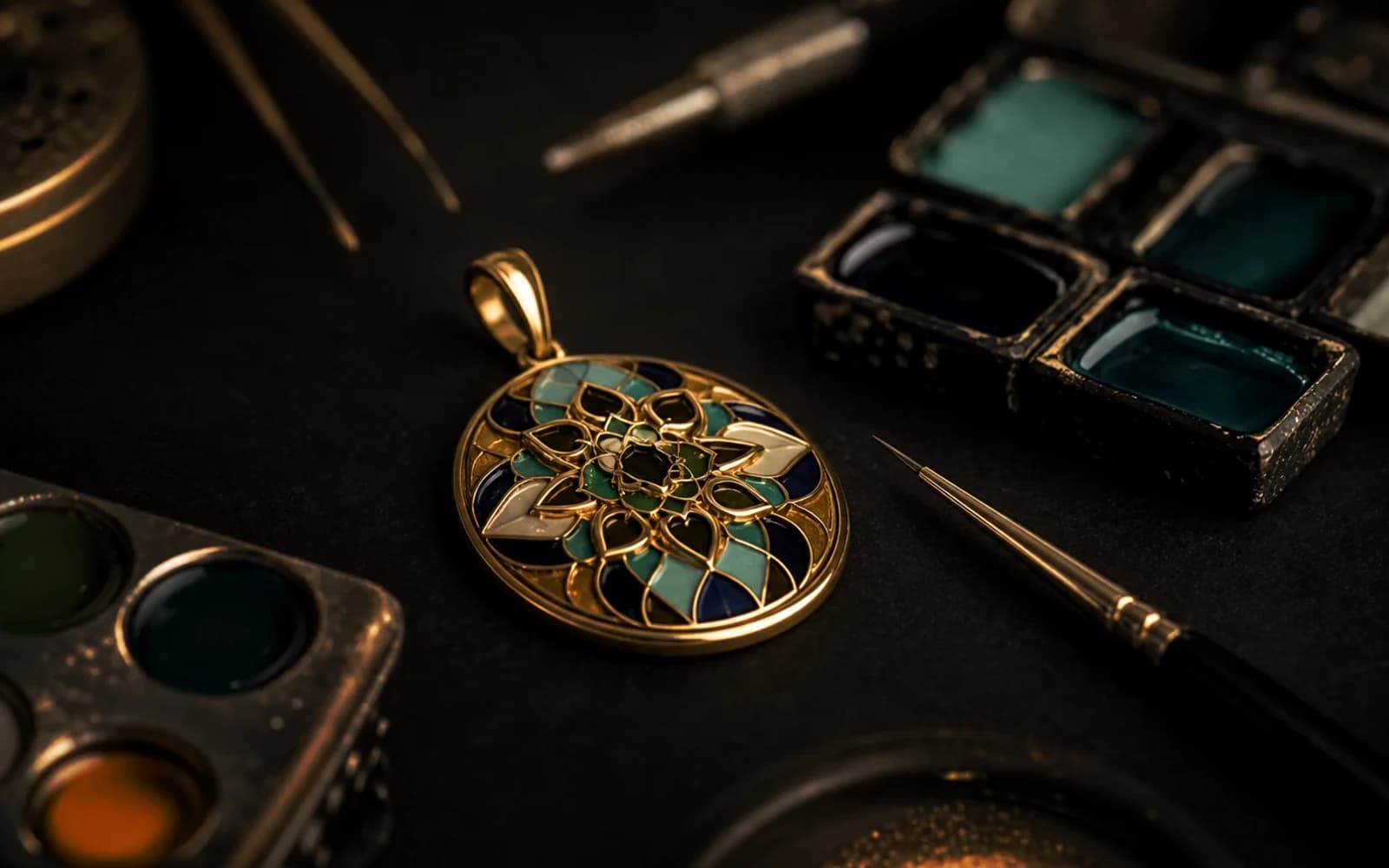
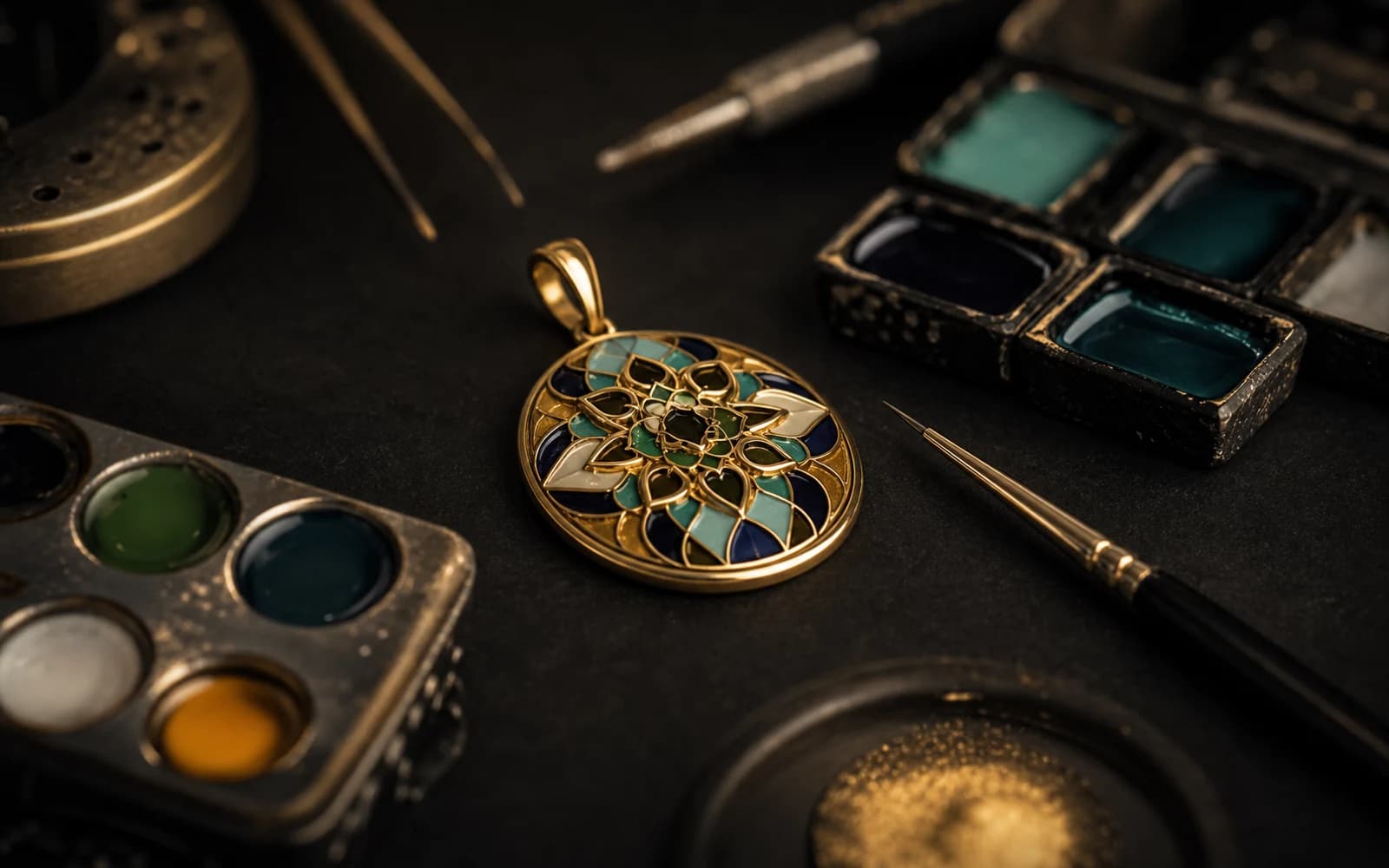
Enamel works best when the design gives color a clear place to sit. Borders, recessed areas, surface depth, and surrounding metal all affect how clean the final result appears.
If enamel is added without planning, the color can look less controlled or fight with the jewelry shape.
Color should be reviewed before production
Digital color references are helpful, but enamel should be discussed in terms of real production expectations. Gloss, opacity, shade, surface size, and lighting can all change how a color feels.
Brands should decide whether enamel is the hero detail or a supporting accent before the CAD model is finalized.
- Define the color area in CAD.
- Use metal borders to keep color edges clean.
- Review enamel together with plating and polishing decisions.
Inspect enamel as part of the full piece
The final check should look at enamel color, surface consistency, edges, surrounding polish, and whether the color supports the overall design.
A good enamel detail should feel intentional, not like decoration added after the real production work was finished.
DMJ production note for Enamel Jewelry Production: What Brands Should Know
For "Enamel Jewelry Production: What Brands Should Know", DMJ Concept applies this production lens: Stone work, enamel, and color details need early planning in Bangkok production. DMJ Concept connects stone sourcing, stone cutting, setting, enamel areas, polishing, plating, and QC so small details support the full jewelry piece.
What enamel needs before production starts
Enamel needs clear boundaries, controlled recesses, and realistic color expectations. The design should allow enamel to sit cleanly without flooding weak edges or covering details that should remain metal.
Before production, the client should confirm color direction, metal finish, surface height, and whether the enamel area must match a brand palette. These decisions are easier to solve in CAD and sample review than after bulk production.
- Keep enamel areas clean enough to fill consistently.
- Confirm color samples before approving a large batch.
- Review how polishing or plating affects nearby enamel.
How enamel can support a brand collection
Enamel can make a collection more recognizable because it adds controlled color without relying only on stones. It works well for charms, pendants, signet details, and fashion pieces where visual identity matters.
The production challenge is consistency. A strong factory workflow should protect color, surface level, edge cleanliness, and finish across the full order.
- Use sample approval to lock the enamel color and surface level.
- Avoid very thin enamel areas that are hard to repeat.
- Plan QC around bubbles, uneven fill, and edge contamination.
Frequently Asked Questions
Can enamel be added to any jewelry design?
Not always. Enamel needs suitable surfaces, borders, and production planning so the final color looks clean and controlled.