A sample proves the direction
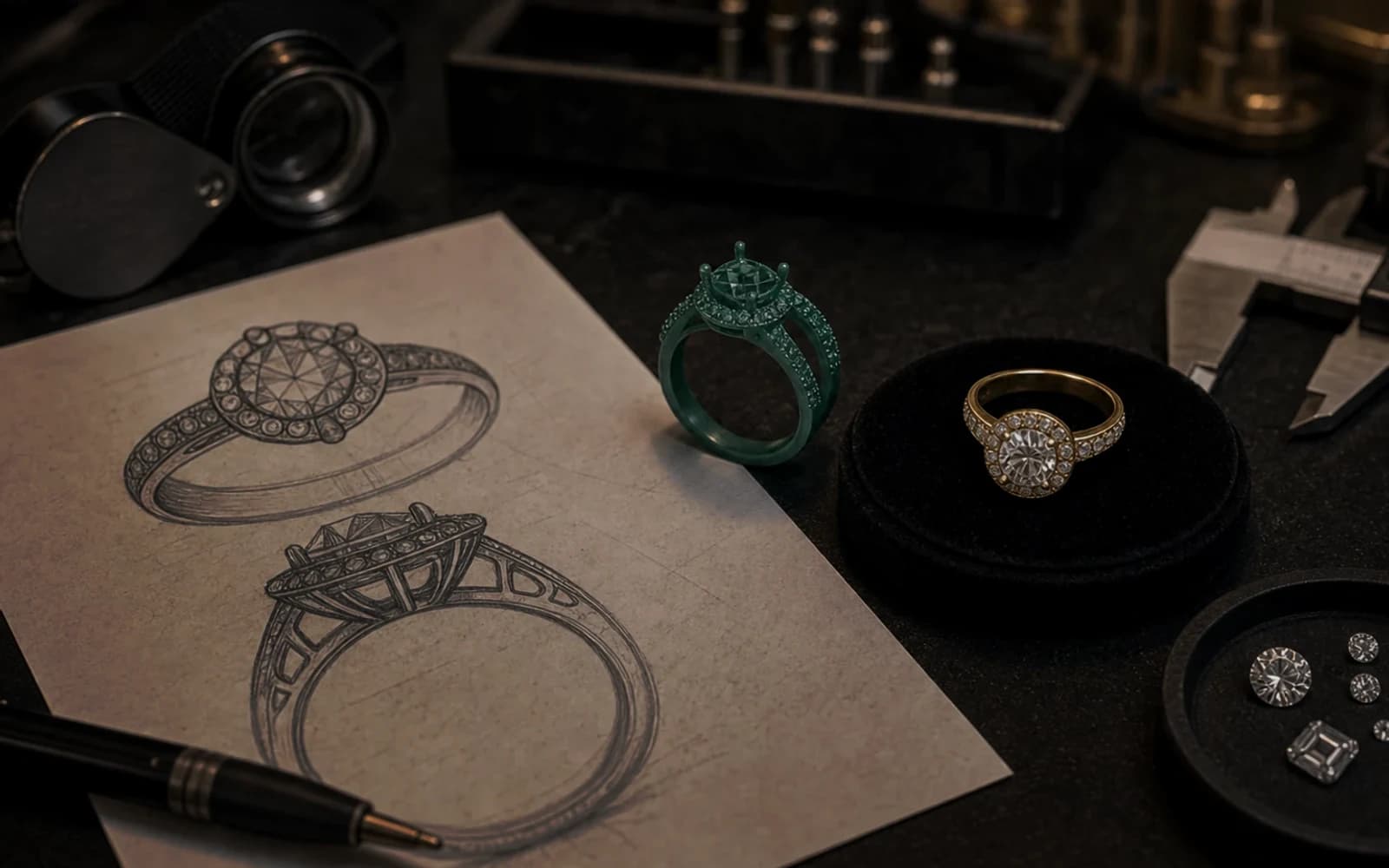
A single sample lets the client review the look, feel, finish, and technical feasibility of the piece. It is the moment when CAD decisions become physical and small problems become easier to see.
The sample should be judged against the brief, not only against a photo. Fit, weight, edges, plating tone, stone placement, and polish all matter.
Bulk production needs repeatability
A larger order changes the question. The factory must reproduce the approved result consistently across many pieces, not just make one beautiful object.
That means specifications, approved sample notes, stone sizes, plating color, packaging requirements, and inspection criteria should be documented before production scales.
- Keep an approved sample or detailed sample photos as reference.
- Confirm acceptable tolerances before production starts.
- Plan QC checks for surfaces, setting, plating, and sizing.
Communication becomes part of production quality
When a project grows from one sample to a batch, communication becomes a production tool. Clear approvals, change notes, and decision history help the factory avoid avoidable mistakes.
This is especially important for brands that plan to reorder. Once the parameters are stable, repeat production becomes easier to manage.
DMJ production note for One Sample vs Bulk Jewelry Production: What Changes
For "One Sample vs Bulk Jewelry Production: What Changes", DMJ Concept applies this production lens: For DMJ Concept, custom jewelry manufacturing is not only about making a single object. The work should make the client feel confident because design, CAD, sample making, casting, polishing, plating, stones, and final review are connected before the piece leaves Bangkok, Thailand.
Why one good sample is not enough for a full batch
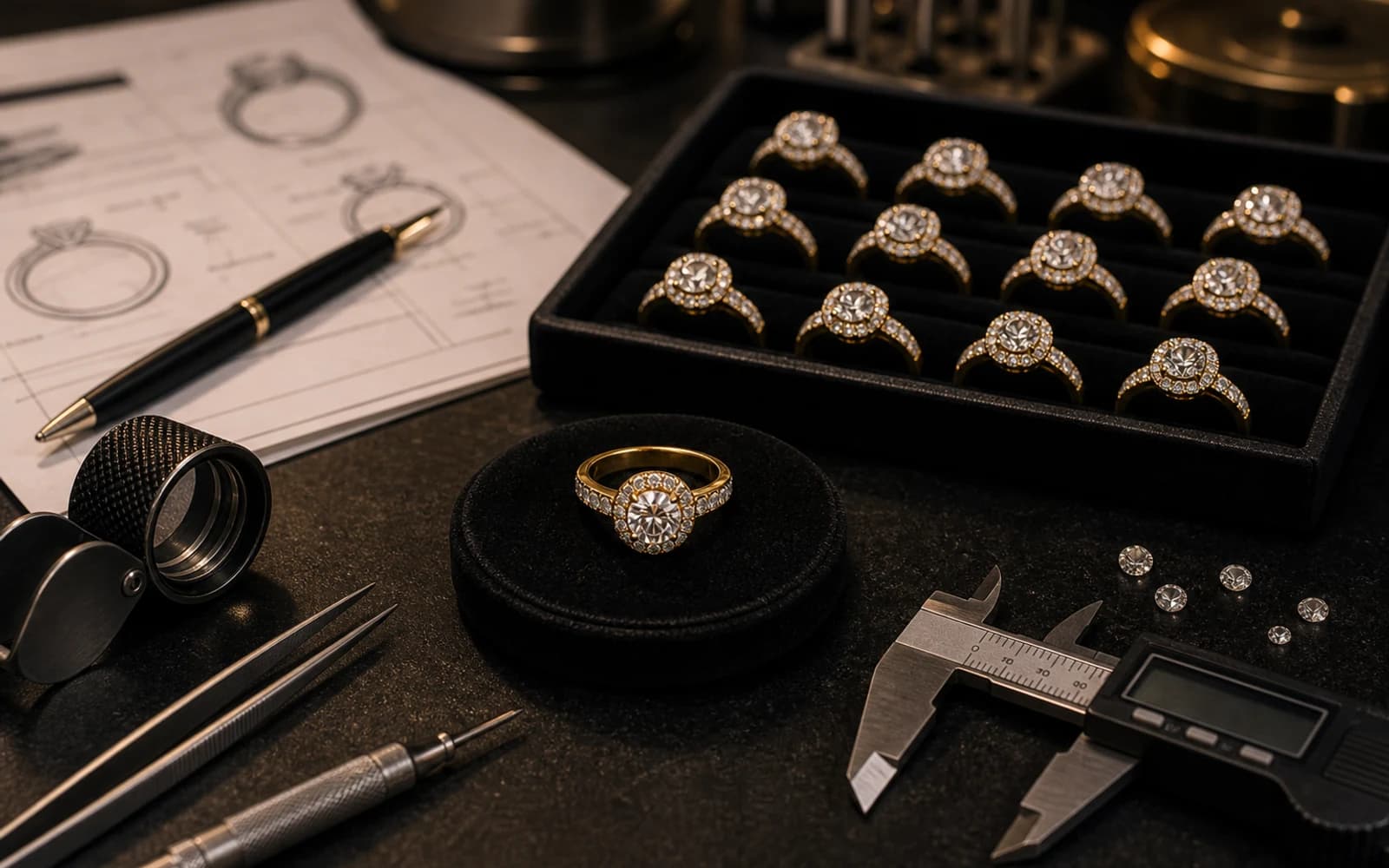
A sample proves that the design can work once. Bulk jewelry production proves that the design can work repeatedly, with the same proportions, surface quality, stone setting, plating tone, and packaging expectation across many pieces.
This is where a jewelry factory Thailand workflow needs clear documentation. Without approved sample notes and inspection rules, a batch can drift away from the result the client originally approved.
- Lock the sample version before ordering a larger quantity.
- Confirm acceptable variation for size, color, and finishing.
- Use photos, measurements, and notes as the production reference.
Quality controls that matter when quantity increases
When production scales, quality control should be built into the order rather than saved for the end. Casting defects, uneven polishing, loose stones, plating inconsistency, and wrong sizes are easier to manage when the factory knows what to inspect throughout the batch.
For brands, this protects the customer experience. The buyer should not receive a product that feels different from the approved sample or from the product photos used to sell the collection.
- Inspect early production pieces before the full batch is completed.
- Check stone security and plating coverage on multiple pieces.
- Keep one approved sample as the physical standard.
Frequently Asked Questions
Can one approved sample be used for repeat jewelry production?
Yes. An approved sample can become the production reference when material, size, finish, and inspection notes are documented clearly.