OEM jewelry manufacturing: the business decision
OEM, ODM, and private label jewelry manufacturing are often mentioned together, but they solve different business problems. Understanding the difference helps a brand ask for the right service and avoid confusion when speaking with a factory.
The decision depends on how developed the product already is. A brand with finished drawings or CAD may need OEM production. A brand with references may need ODM-style development. A retail brand may need private label support with logo, packaging, and reorders.
- OEM jewelry manufacturing decision check: Define whether you need OEM, ODM, or private label before quoting.
- OEM jewelry manufacturing buyer check: Clarify who controls the design and who develops it.
What to send before quoting OEM jewelry manufacturing
Tell the factory whether you already own the design, need design development, need sample making, need branded packaging, or need long-term production. This language changes the quote and the production responsibility.
For OEM, the factory needs accurate design files or samples. For ODM, the factory needs the design direction and target market. For private label, the factory also needs branding, logo placement, packaging, SKU, and repeat order expectations.
A stronger brief for OEM jewelry manufacturing separates fixed requirements from flexible choices. If define whether you need OEM, ODM, or private label before quoting the factory can flag that early, protect the sample stage, and avoid discovering the problem only after CAD or casting has already started.
- OEM jewelry manufacturing quote brief: Confirm logo, packaging, tags, and SKU requirements.
CAD, samples, and production checks for OEM jewelry manufacturing
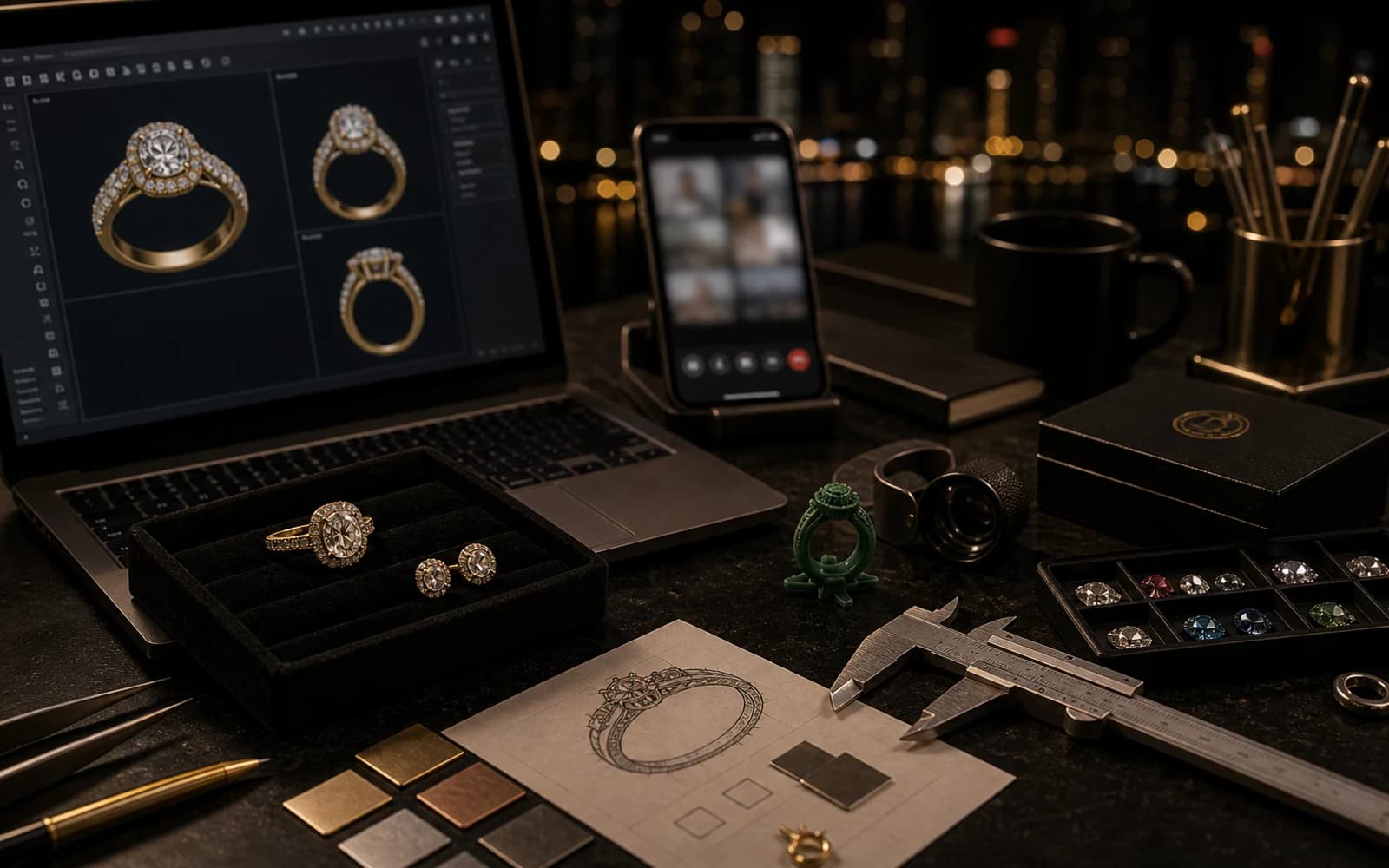
CAD, sample review, casting, finishing, and QC can exist in all three models, but the ownership of design decisions is different. That is why the production model should be defined before cost is compared.
The sample should be approved against the correct model. An OEM sample must match the client specification; an ODM sample may still refine the design; a private label sample must also match brand presentation.
- OEM jewelry manufacturing sample approval: Ask what files, molds, and samples are stored for reorders.
Cost, MOQ, and scaling logic for OEM jewelry manufacturing
OEM may be more predictable when files are ready. ODM can include more development cost. Private label adds branding, packaging, tags, labels, and repeat production controls that should be priced clearly.
A brand planning multiple collections should define which designs are original, which are adapted, and which production assets must be stored for future orders. This prevents ownership confusion later.
- OEM jewelry manufacturing scaling record: Review jewelry quality and brand presentation together.
Quality risks to review for OEM jewelry manufacturing
The common risk is using the wrong term and receiving the wrong quote. A factory may price production only while the client expects design help, branding, packaging, and sample revisions.
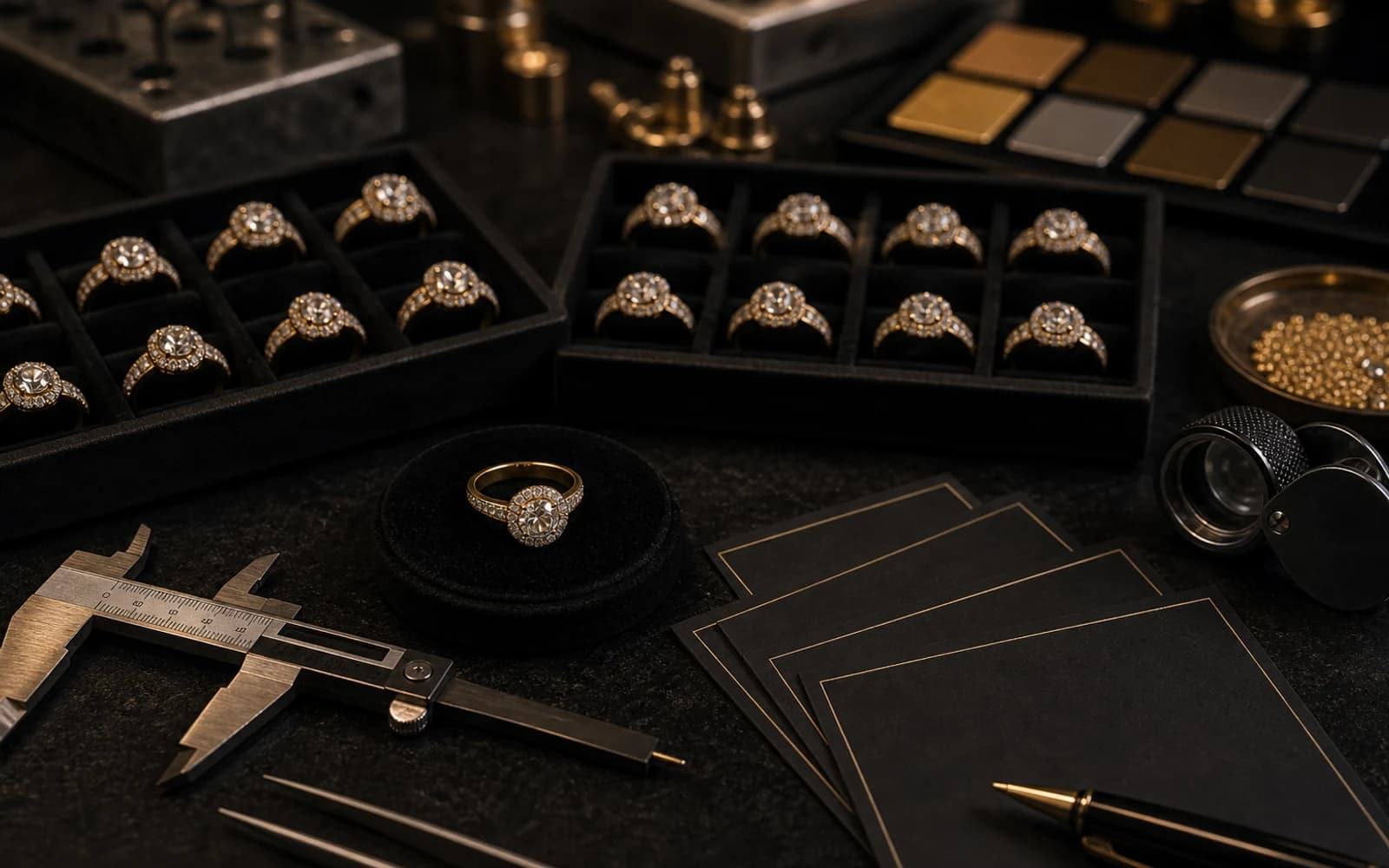
QC should check not only the jewelry but also whether the final result matches the chosen model: design accuracy for OEM, development direction for ODM, and brand consistency for private label.
For OEM jewelry manufacturing, the approval record should make the pass and fail points visible before any larger order is released. Use close-up photos, short videos, and written notes to confirm put ownership expectations in writing, then keep those records as the comparison standard for future reorders.
- OEM jewelry manufacturing QC checkpoint: Put ownership expectations in writing.
DMJ production note for OEM vs ODM vs Private Label Jewelry Manufacturing: What Is the Difference?
DMJ Concept supports custom jewelry manufacturing in Bangkok where a project can move from concept and CAD planning into sampling, casting, stone setting, polishing, engraving, finishing, and brand-ready review.
For OEM jewelry manufacturing, the Bangkok handoff should start with define whether you need OEM, ODM, or private label before quoting and then confirm clarify who controls the design and who develops it. DMJ Concept can connect that brief to CAD review, sample planning, finishing, QC, packaging, and reorder documentation before production moves forward.
- DMJ Concept production review: connect OEM jewelry manufacturing with CAD, sampling, finishing, and QC.
- DMJ Concept Bangkok workflow: document OEM jewelry manufacturing approvals for thailand production decisions before reorder planning.
- DMJ Concept client handoff: keep OEM jewelry manufacturing files, sample photos, and production notes together.
Need help choosing OEM, ODM, or private label production?
Send DMJ Concept your design stage, references, branding needs, and target quantity through the contact form. We can help define the right Bangkok jewelry production model.
Frequently Asked Questions
What is the difference between OEM and private label jewelry?
OEM usually focuses on producing the client design, while private label also includes brand presentation such as logo placement, tags, packaging, and repeat production standards.