Jewelry Casting Defects: Porosity, Shrinkage, and Surface Issues: what the plan must prove
Casting defects can appear small at first but affect polishing, plating, stone setting, and durability. Clients should understand what defects mean before approving samples or bulk production.
For jewelry casting defects, the plan should prove the inspection standard, acceptable variation, repeatability, and how the approved sample protects future orders. The first brief should also answer this point clearly: Are wall thicknesses realistic for casting?
- jewelry casting defects: Are wall thicknesses realistic for casting?
- jewelry casting defects: Are there areas likely to trap porosity?
- jewelry casting defects: Can rough surfaces be polished cleanly?
Quote preparation for jewelry casting defects
Prepare the design type, material, expected surface finish, stone setting plan, and sample approval requirements. Some casting risk can be reduced before the piece reaches metal.
A quote for jewelry casting defects is only useful when it describes the same production scope the client expects. This question should be resolved before comparing numbers: Are there areas likely to trap porosity?
- jewelry casting defects: Are wall thicknesses realistic for casting?
- jewelry casting defects: Are there areas likely to trap porosity?
- jewelry casting defects: Can rough surfaces be polished cleanly?
- jewelry casting defects: Is the sample inspected before plating?
CAD and sample checks for jewelry casting defects
CAD can influence casting quality through thickness, sprue planning, sharp transitions, and areas that trap defects. A production-aware model is easier to cast cleanly.
Jewelry Casting Defects: Porosity, Shrinkage, and Surface Issues should be reviewed in CAD from the views that affect the real item. The sample review should specifically confirm: Can rough surfaces be polished cleanly?
- jewelry casting defects: Can rough surfaces be polished cleanly?
- jewelry casting defects: Is the sample inspected before plating?
- jewelry casting defects: What defects are acceptable or unacceptable?
Material and finish choices for Jewelry Casting Defects: Porosity, Shrinkage, and Surface Issues
Different metals and alloys behave differently during casting. Brass, silver, and gold directions each require suitable process control and finishing expectations.
Material decisions for jewelry casting defects should be tied to the way the piece will be sold and worn. Before production repeats, the client should confirm: Is the sample inspected before plating?
- jewelry casting defects: What defects are acceptable or unacceptable?
- jewelry casting defects: Is the sample inspected before plating?
- jewelry casting defects: Can rough surfaces be polished cleanly?
QC and reorder standards for jewelry casting defects
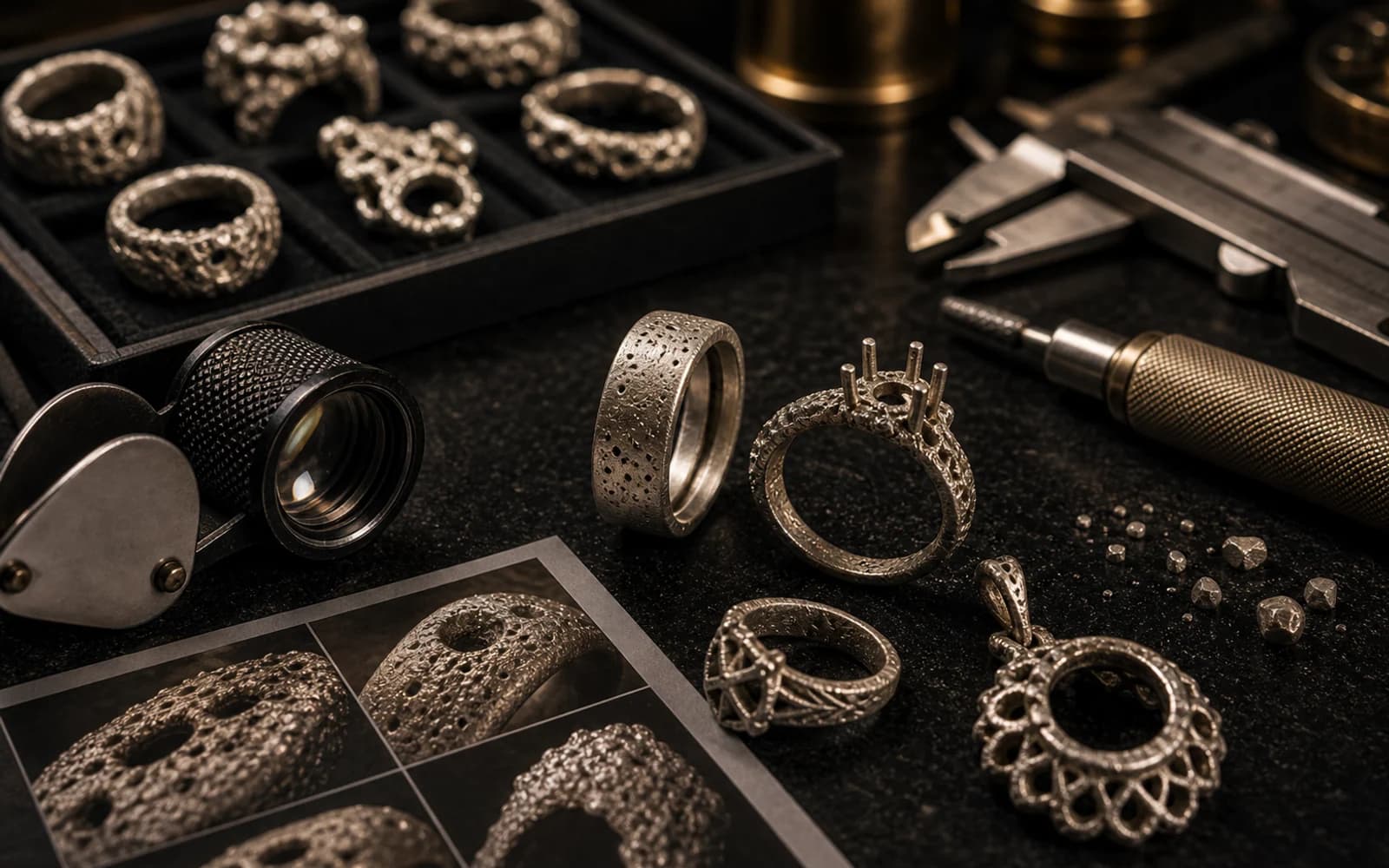
QC should check porosity, pits, shrinkage, incomplete fill, distortion, rough surfaces, and weak areas before polishing, plating, or setting stones.
Jewelry Casting Defects: Porosity, Shrinkage, and Surface Issues may overlap with searches for jewelry manufacturer Thailand and wholesale jewelry Thailand, but the useful page value comes from explaining the jewelry casting defects decisions that change CAD, sampling, finishing, QC, or reorder results. Final QC should keep this article-specific standard visible: What defects are acceptable or unacceptable?
- jewelry casting defects: Are wall thicknesses realistic for casting?
- jewelry casting defects: Are there areas likely to trap porosity?
- jewelry casting defects: Can rough surfaces be polished cleanly?
- jewelry casting defects: Is the sample inspected before plating?
- jewelry casting defects: What defects are acceptable or unacceptable?
Need help with jewelry casting defects?
If you are worried about casting quality, contact DMJ Concept. We can review your design and explain which CAD, sample, and QC steps reduce casting risk.
DMJ production note for Jewelry Casting Defects: Porosity, Shrinkage, and Surface Issues
For "Jewelry Casting Defects: Porosity, Shrinkage, and Surface Issues", DMJ Concept applies this production lens: Quality is visible in small details: symmetry, weight, polish, plating coverage, stone security, and surface finish. DMJ Concept treats QC as part of jewelry manufacturer Thailand work from CAD review through final inspection, not only as the last step.
Frequently Asked Questions
What is porosity in jewelry casting?
Porosity is small internal or surface voiding that can create pits, weak areas, or finishing problems.
Can casting defects be prevented completely?
Risk can be reduced through good CAD, casting control, sample review, and QC, but inspection remains important.