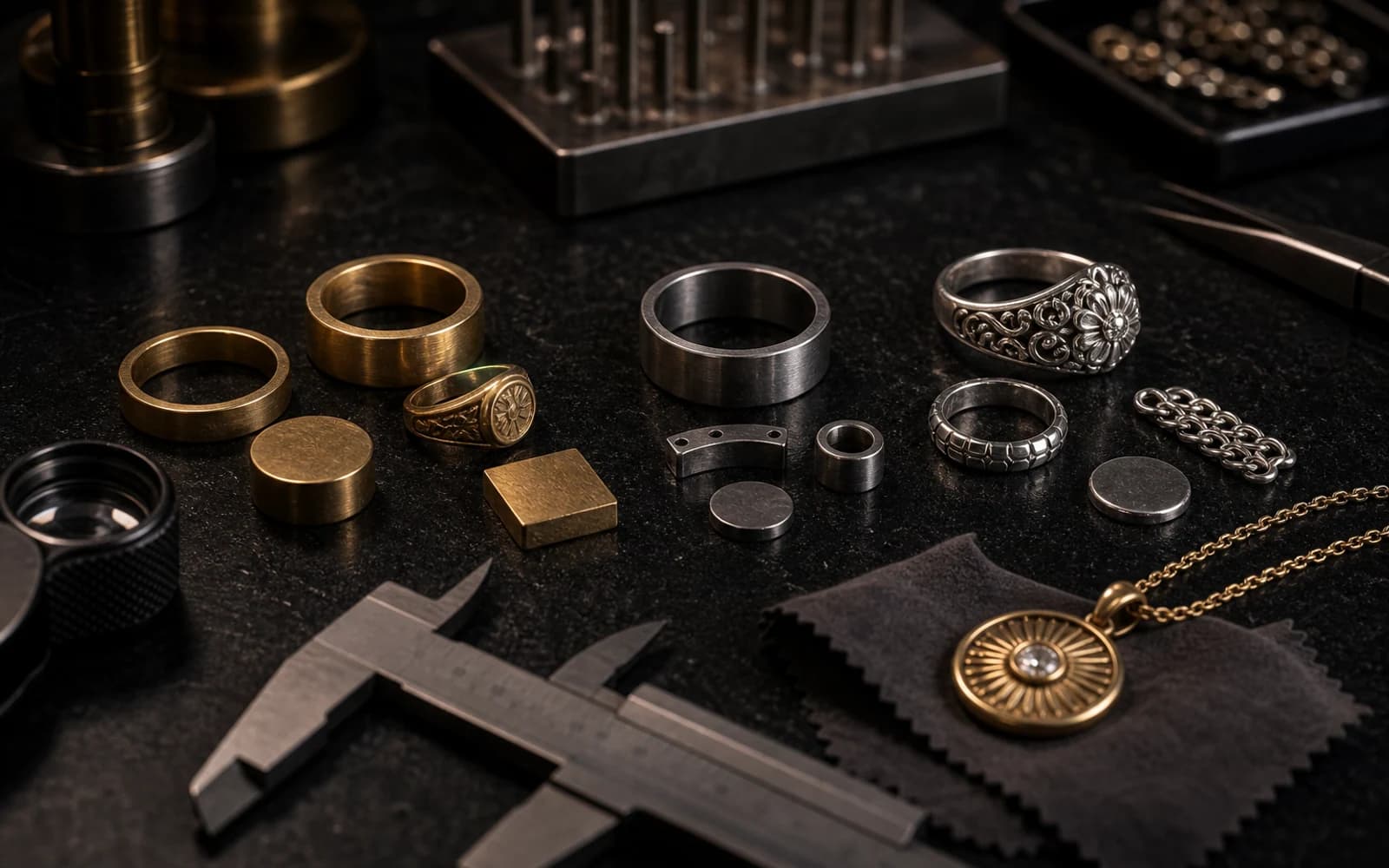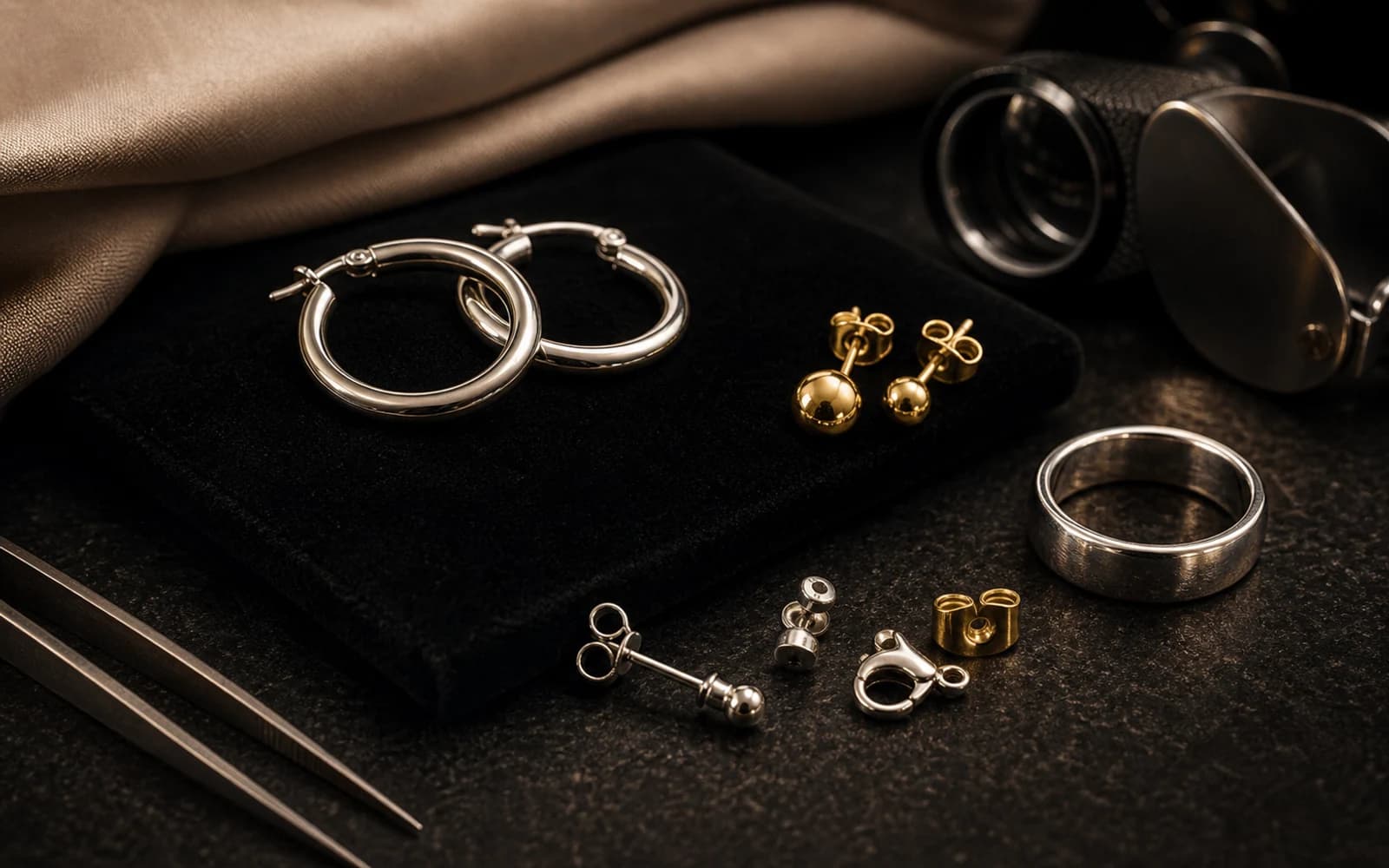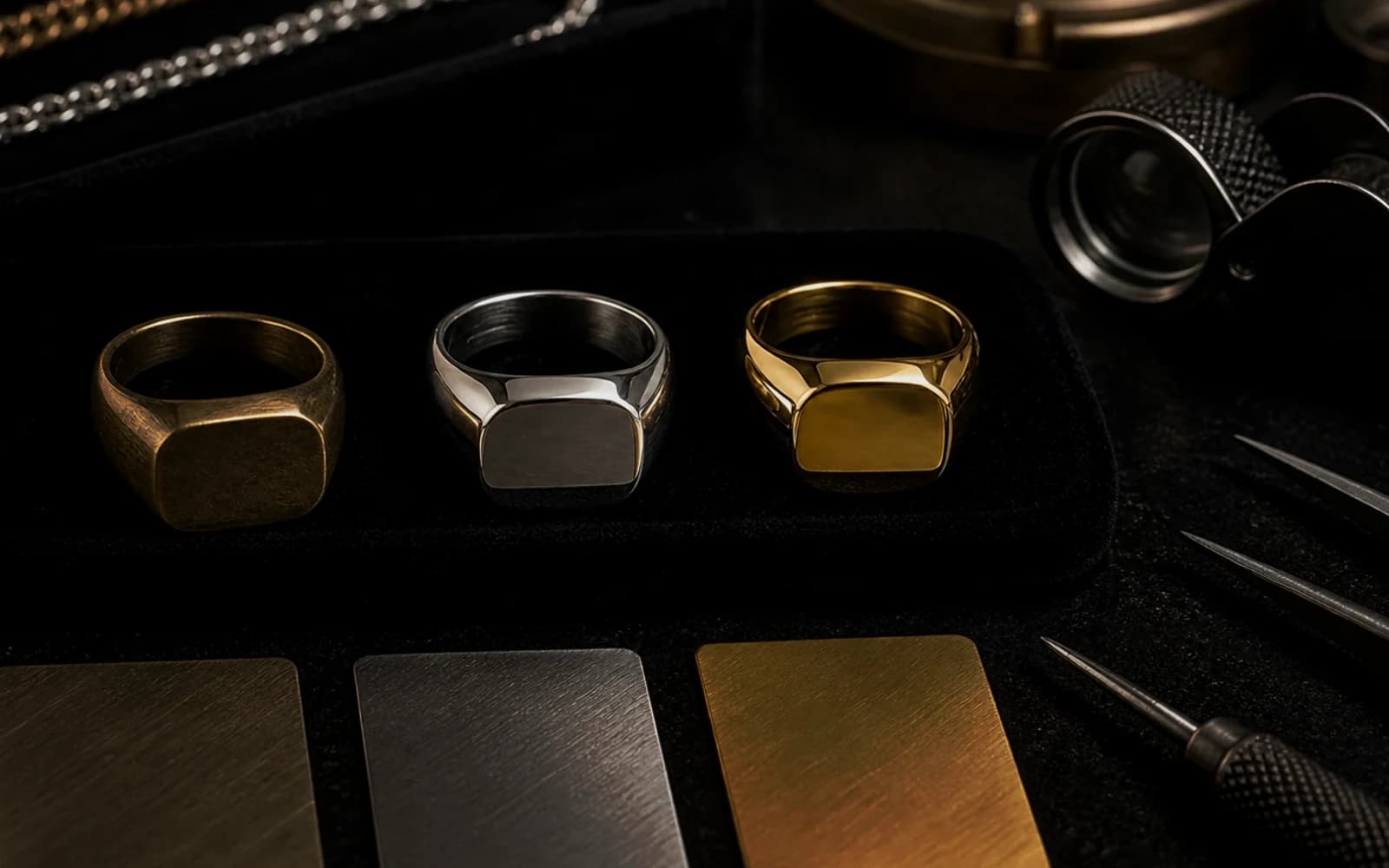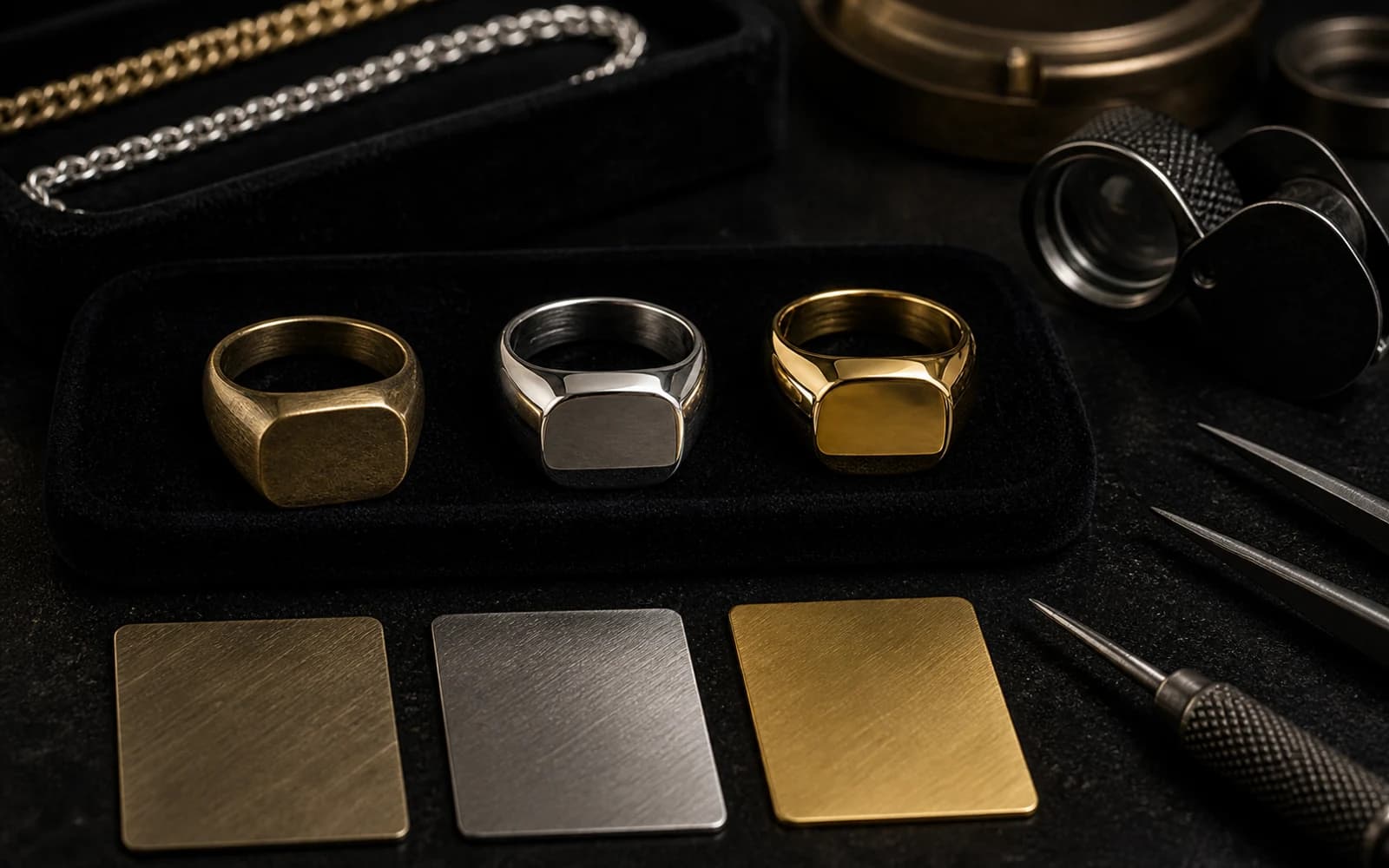
Choose material based on the project goal
Material is not only a technical decision. It affects price position, perceived value, finish, weight, and how the customer will understand the piece.
Brass can support fashion jewelry and larger plated forms. 925 silver can support a more precious story. Gold can be the right direction when the project requires fine jewelry positioning.
Match the finish to the base metal
The same finish can feel different on different base metals. Polishing, plating, stone setting, and enamel work should be planned with the material in mind.
- Use brass when design scale and cost control are priorities.
- Use 925 silver when precious metal positioning matters.
- Use gold when the project brief requires fine jewelry value and durability expectations.
Ask for material advice early
If the material is uncertain, ask before CAD and production details become fixed. A small change in base metal can affect model decisions, finishing, and production planning.
DMJ production note for Choosing Brass, Silver, or Gold for Custom Jewelry
For "Choosing Brass, Silver, or Gold for Custom Jewelry", DMJ Concept applies this production lens: Material choices shape the final promise of jewelry in Thailand, whether the project involves thai jewelry styling, 925 silver, brass, solid gold, or plated pieces. DMJ Concept reviews cost, finish, durability, and presentation before production decisions are locked.
How to choose the right metal for the project
The best metal depends on the product goal. Brass can work for fashion jewelry and controlled budgets. 925 silver can support a precious-metal story. Gold can support long-term value and fine jewelry positioning.
The choice should be made before CAD becomes too detailed because metal affects thickness, weight, finishing, plating, stone setting, cost, and customer expectation.
- Use brass for bold forms and budget-controlled fashion pieces.
- Use 925 silver when material value matters to the buyer.
- Use gold when long-term wear and fine jewelry positioning matter.
Why material decisions shape the final experience
Material choice changes how a piece feels in the hand, how it wears, how it can be polished, how stones are set, and how the buyer understands value. A lower budget does not automatically mean a weak result if the design is planned honestly.
DMJ Concept can suggest material alternatives that protect the design concept while matching the client budget. That is often the difference between a piece that simply exists and a piece that feels resolved.
- Compare material choice against retail price and wear expectations.
- Ask how the material affects polishing and plating.
- Review the sample before committing to repeat production.
Frequently Asked Questions
Is brass or silver better for custom jewelry?
Neither is always better. Brass can be practical for fashion jewelry and controlled budgets, while 925 silver is stronger when precious-metal value matters.
Can a limited budget still produce premium-looking jewelry?
Yes, if the material, plating, polishing, stones, and proportions are planned carefully around the budget instead of chosen randomly.